May 2016

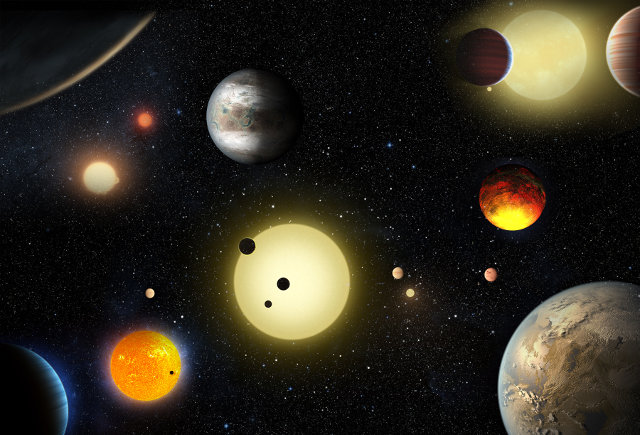
Artistic representation of the biggest dwarf planets in the solar system (Image Konkoly Observatory/András Pál, Hungarian Astronomical Association/Iván Éder, NASA/JHUAPL/SwRI)

An article published in “The Astronomical Journal” describes a research on a trans-Neptunian object called 2007 OR10. A team of astronomers used NASA’s Kepler space telescope and archive data of ESA’s Herschel space telescope’s observations to study this celestial body. The result is that they discovered that it’s much bigger than it looked and is probably a dwarf planet.

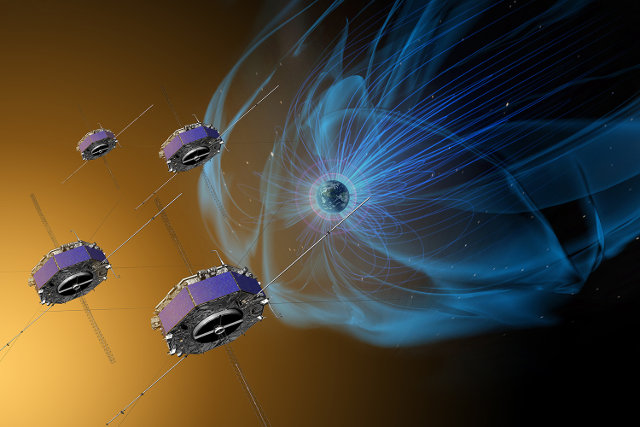
Artistic concept of the MMS space probes at the boundaries of the Earth's magnetic field (Image NASA/Goddard/Conceptual Image Lab)

An article published in the journal “Science” describes the first direct observation of the phenomenon called magnetic reconnection. NASA’s four MMS twin space probes allowed to obtain the best observations made so far of the interaction between the Earth and Sun’s magnetic fields. According to the researchers who analyzed the data collected, electrons trigger this phenomenon.

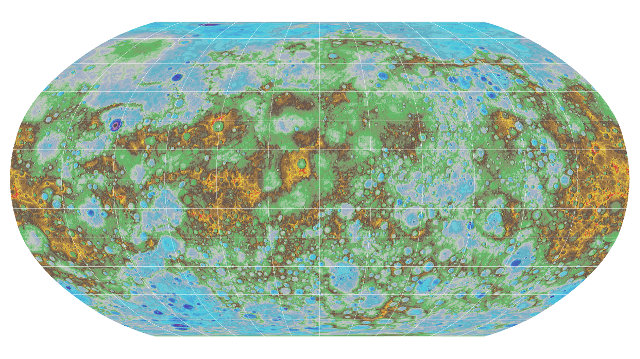
Topographic map of the planet Mercury (Image USGS)

NASA’s MESSENGER mission has published the first complete topographical map of the planet Mercury. To be precise, it’s a Digital Elevation Model (DEM), a representation of the elevation distribution of territory, or of another surface, in digital format. It’s the product of the processing of data collected by the MESSENGER space probe during its mission ended just over a year ago.