ISRO

Blogs about ISRO, the Indian space agency

The SpaDeX satellites blasting off atop a PSLV-CA rocket (Photo courtesy ISRO)

It was night in India when the two satellites of the SpaDeX (Space Docking Experiment) mission were launched from the Satish Dhawan Space Center atop a PSLV-CA rocket. The two satellites separated from the rocket’s final stage and entered a circular orbit at an altitude of about 475 kilometers. Another 24 experiments were launched on the same mission, but the SpaDeX satellites are the most important because they will serve to test the docking technologies necessary for the progress of the Indian space program.

The Aditya-L1 space probe at blastoff (Image courtesy ISRO)

A few hours ago, the Indian space probe Aditya-L1 blasted off from the Satish Dhawan space center atop a PSLV-XL rocket. After about ten minutes, it regularly separated from the rocket’s last stage. In about 109 days, Aditya-L1 will reach the Lagrange point called L1, about 1.5 million kilometers from the Earth, where it will begin its mission of observing the solar atmosphere and various processes taking place on the Sun’s surface. It will join other space probes and solar observatories helping to unlock the last secrets of the Sun.

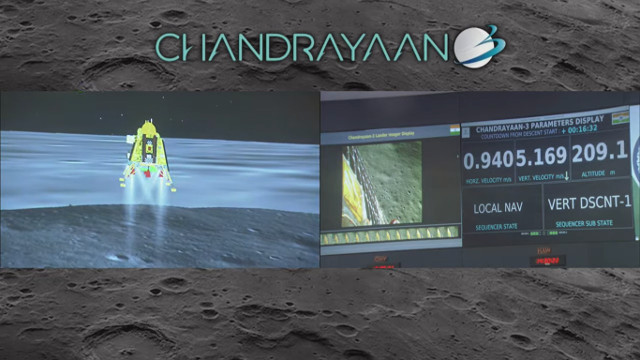
Animation of the Vikram lander and the Pragyan rover during the moon landing (on the left) and the real situation (on the right) (Image courtesy ISRO)

The Vikram lander and the Pragyan rover of the Indian mission Chandrayaan 3, launched on July 14, have successfully landed on the Moon. The idea at the Indian space agency ISRO was to replicate what was done almost exactly four years ago in the Chandrayaan 2 mission, eliminating the problems encountered on that occasion in order to achieve success. The hard lesson was learned and this time, the vehicles successfully completed the insidious maneuver of landing on the Moon. India joins the small club of nations that successfully sent a vehicle to the Moon.

The launch of Chandrayaan 3 mission (Image courtesy ISRO)

A little while ago, a GSLV Mk-III rocket blasted off from India’s Satish Dhawan Space Centre with the Chandrayaan 3 mission’s Vikram lander and Pragyaan rover. After just over 16 minutes, the vehicles separated from the rocket’s last stage to begin the series of maneuvers that will gradually stretch their orbit until they are brought into the area of influence of the Moon, where the lander and rover will land on August 23 in this follow-up to the Chandrayaan 2 mission.

The landing on the Moon of the Indian Vikram lander and Pragyan rover didn’t succeed

The Indian Chandrayaan 2 mission’s Vikram lander and the Pragyan rover, launched on 22 July, attempted a Moon landing but something went wrong and the contact was lost at an altitude of about 2.1 kilometers. The Indian space agency ISRO’s engineers are analyzing the data collected, but probably there was some problem during the braking phase with loss of attitude and subsequent crash of the vehicles.