
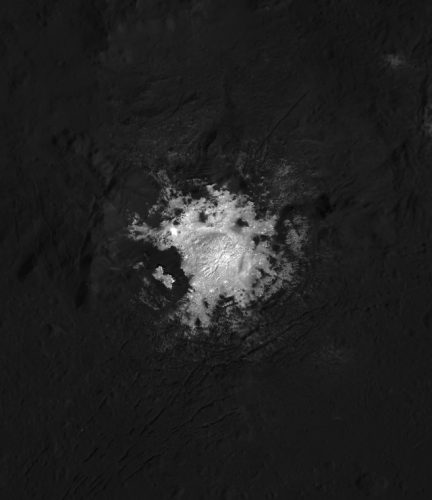
New photos of Occator Crater on the dwarf planet Ceres while the Dawn space probe is going towards the end of its mission
At the Committee on SPAce Research (COSPAR) meeting held this week in Pasadena, NASA’s JPL scientists are presenting the latest information gathered by NASA’s Dawn space probe about the dwarf planet Ceres. In particular, there’s an attention on Occator Crater, the most famous crater thanks to its brightness due to the various bright spots made of salts inside it, now called faculae. In the next few months Dawn will finish its mission but will continue to collect data from the lowest orbit at only 34-35 kilometers (about 21 miles) of altitude.
