
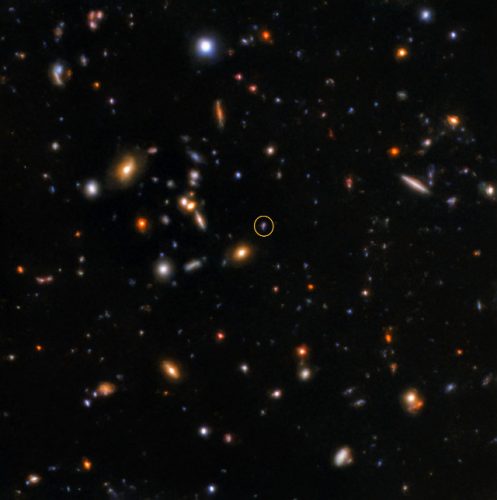
The most distant optical afterglow from a short gamma-ray burst detected
An article to be published in “The Astrophysical Journal Letters” reports a study of the short gamma-ray burst cataloged as GRB181123B focusing on the discovery of what in jargon is called afterglow, in short, the residues of the emissions of GRB181123B, which in this case were detected at optical frequencies as well. The estimates indicate that that event was generated around ten billion years ago making it the most distant ever detected with an optical afterglow. Probably the cause was a neutron star merger, so events of this type offer information on how long it took for them to occur and their amount at that time.
