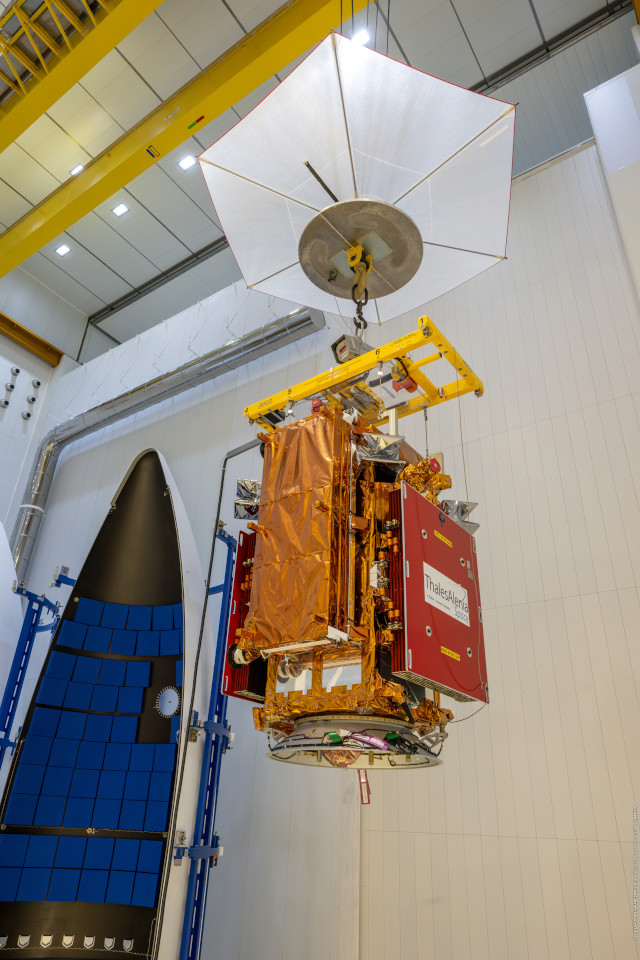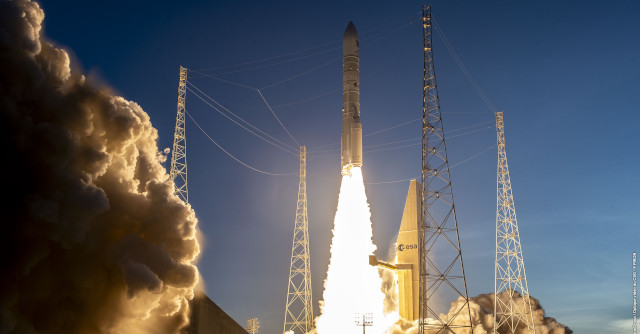
A few hours ago, the Sentinel-1D satellite, part of the Copernicus / GMES, was launched from the Kourou spaceport, in French Guiana, atop an Ariane 6 rocket. After about 34 minutes, the satellite regularly separated from the rocket’s last stage and started sending signals. Its final orbit in low Earth orbit will be at an altitude of about 693 kilometers.
The Sentinel-1D satellite replaces Sentinel-1A, launched on April 3, 2014. This old satellite is still operational, but has outlived its seven-year mission. Sentinel-1D will form a pair with Sentinel-1C, launched on December 5, 2024. This will create a pair of new satellites equipped with the most advanced instruments for more advanced land monitoring.
The Sentinel-1 satellites are part of the programme originally called Global Monitoring for Environment and Security (GMES) and later Copernicus, which aims to create an autonomous system for monitoring the territory through a constellation of satellites that have different functions.
Having two Sentinel-1 satellites in orbit is important to have better coverage of the territory. They’re equipped with an advanced instrument called SAR (Synthetic aperture radar) that allows them to obtain images of the areas they’re flying over continuously, day and night, and in all weather conditions.
Like the Sentinel-1C already is, the new Sentinel-1D satellite is equipped with the Automatic Identification System (AIS) instrument as well, which is intended to help ships avoid collisions, especially when they’re far from land-based radar systems. This instrument integrates with the automatic identification system introduced years ago to assist the guidance of ships and the maritime authorities who monitor them.
The Sentinel-1 series satellites are used to monitor the environment in normal conditions, if rising sea levels and shrinking glaciers can be considered normal. Over the years, they have also provided a great deal of imagery of areas where there were earthquakes and floods. This information is very useful in managing rescue operations and interventions to make buildings safe in the affected areas.
The Sentinel-1D satellite is now to pass through the commissioning phase to ensure all its instruments are functioning properly and that it works seamlessly with Sentinel-1C. If all goes well, in a few months, it will be able to fully replace the old Sentinel-1A and raise the quality of environmental monitoring to a new level.