2025

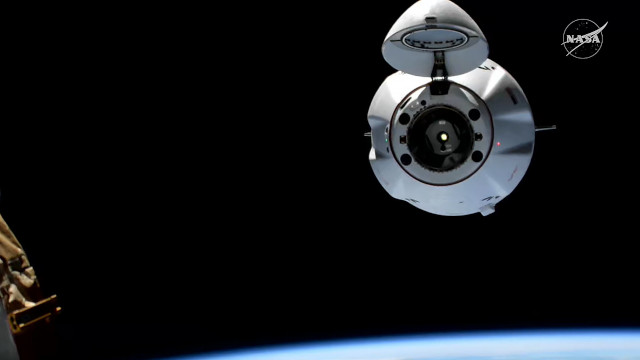
The Dragon 2 cargo spacecraft blasting off atop a Falcon 9 rocket in its CRS-33 rocket (Image NASA+)

A little while ago, the SpaceX Dragon 2 spacecraft blasted off atop a Falcon 9 rocket from Cape Canaveral in its CRS-33 (Cargo Resupply Service 33) mission, also referred to as SPX-33. After almost 12 minutes, it separated successfully from the rocket’s last stage and went en route. This is the 33rd mission for the Dragon/Dragon 2 spacecraft to resupply the International Space Station with various cargoes and then return to Earth, again with various cargoes.

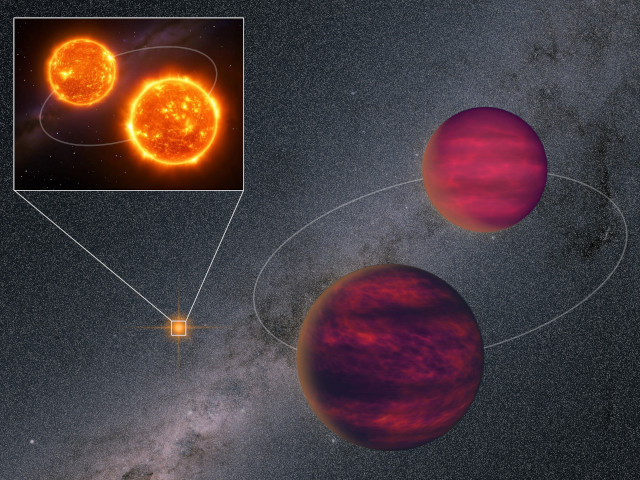
An artist's impression of the UPM J1040−3551 AabBab system

An article published in the journal “Monthly Notices of the Royal Astronomical Society” (MNRAS) reports the discovery of a rare hierarchical quadruple system, which was cataloged as UPM J1040−3551 AabBab. A team of researchers used observations conducted with ESA’s Gaia space probe and NASA’s WISE space telescope, followed by spectroscopic detection and analysis, to identify this quartet consisting of a pair of red dwarfs and a pair of brown dwarfs. This relatively young system may offer new information, especially about brown dwarfs, objects halfway between planets and stars.

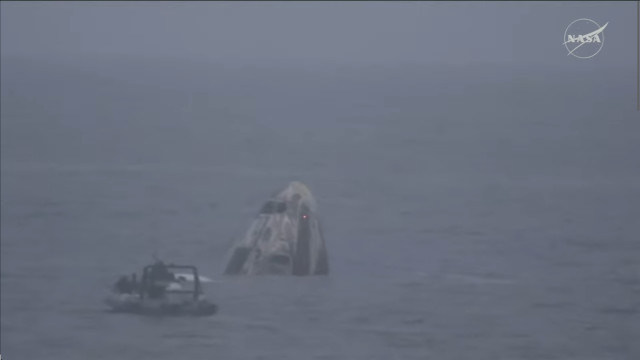
The Crew Dragon Endurance spacecraft after splashing down at the end of its Crew-10 mission (Image NASA+)

A little while ago, SpaceX’s Crew Dragon Endurance spacecraft completed its Crew-10, or SpaceX Crew-10, mission for NASA with a successful splashdown. Aboard were astronauts Anne McClain, Nichole Ayers, and Takuya Onishi, and cosmonaut Kirill Peskov, who had arrived at the International Space Station on March 16, 2025, as part of Expedition 72/73. The Crew-10 members completed SpaceX’s 10th regular crewed mission in the Pacific Ocean, off the coast of California. The Crew Dragon had left the Station approximately 17.5 hours earlier.

The Alpha Centauri system as seen by the James Webb Space Telescope on the left, a zoom of the two main stars in the center, and a further zoom on the right indicating the exoplanet candidate designated as S1.

Two articles accepted for publication in “The Astrophysical Journal Letters” report different aspects of the study that led to the possible discovery of a gas giant planet orbiting the star Alpha Centauri A. Astronomers used observations with the James Webb Space Telescope’s MIRI instrument to identify a light source whose characteristics make it a candidate exoplanet. The information gathered suggests it may be a gas planet similar in size to Jupiter, although its mass could be close to Saturn’s. If confirmed, it would be the closest exoplanet orbiting a Sun-like star in its system’s habitable zone.