Launches

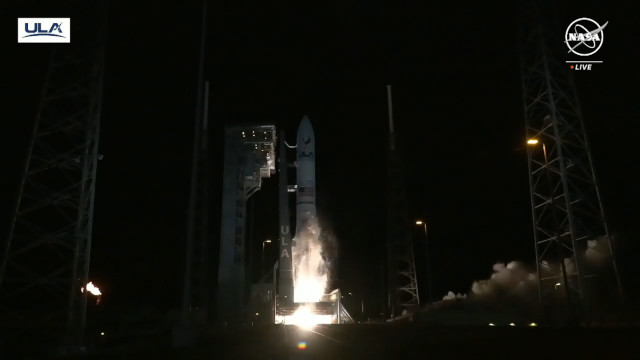
The Vulcan rocket blasting off (Image NASA TV)

A little while ago, ULA’s Vulcan rocket launched on its maiden mission, formally designated as CERT-1. For the occasion, it was carrying Astrobotic Technology’s Peregrine Moon lander, which separated from the rocket stage called Centaur after about 50 minutes. A capsule containing ashes of various famous people was also launched into a heliocentric orbit. The Centaur continued its mission with a few burns and cut-offs of its engine until it goes out of Earth orbit, scheduled after just under 4.5 hours from the launch.

The Progress MS-25 cargo spacecraft blasting off atop a Soyuz-2.1a rocket (Image NASA TV)

A little while ago, the Progress MS-25 spacecraft blasted off atop a Soyuz-2.1a rocket from the Baikonur Cosmodrome in Kazakhstan. After about nine minutes it successfully separated from the rocket’s last stage and was placed on its route. The cargo spacecraft began its resupply mission to the International Space Station also called Progress 85 or 85P. In this mission, the route used is the one that requires about two days.

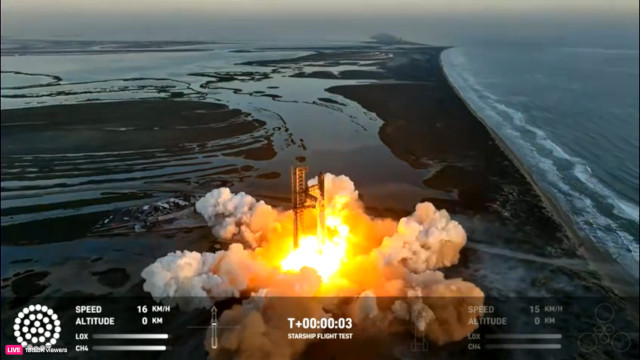
Super Heavy Booster 8 and Starship 25 blasting off (Image courtesy SpaceX)

SpaceX conducted a new flight test of its Super Heavy rocket and Starship prototypes, launched from its base in Boca Chica, Texas. This is the second test involving the entire system of Elon Musk’s company which is supposed to revolutionize space travel with an unprecedented transport capacity and being totally reusable. In this case, however, they are prototypes with the Super Heavy identified as Booster 9 and the Starship identified as Starship 25 or Ship25 or simply S25. Despite the upgrades, they don’t have the safety requirements required to conduct controlled landings. After the first test conducted on April 20, many changes were made to the Super Heavy and Starship systems but also to the launch pad.

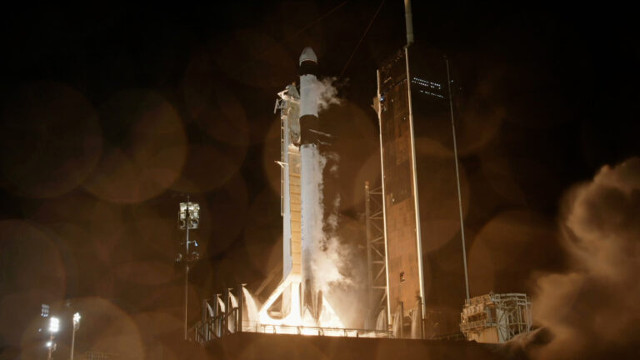
SpaceX Dragon 2 cargo spacecraft stars its CRS-29 mission blasting off atop a Falcon 9 rocket (Photo NASA)

A few hours ago, the SpaceX Dragon 2 spacecraft blasted off atop a Falcon 9 rocket from the Kennedy Space Center in its CRS-29 (Cargo Resupply Service 29) mission, also referred to as SPX-29. After almost exactly 12 minutes it separated successfully from the rocket’s last stage and went en route. This is the 29th mission for the Dragon/Dragon 2 spacecraft to resupply the International Space Station with various cargoes and then return to Earth, again with various cargoes.

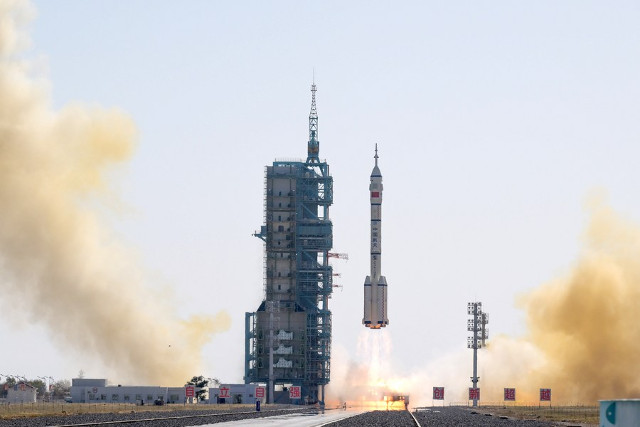
The Shenzhou 17 spacecraft blasting off (Photo courtesy Li Zhipeng)

A confirmation has arrived that three Chinese taikonauts from the Shenzhou 17 mission reached the Chinese space station Tiangong with an automated docking maneuver. They blasted off about 6.5 hours earlier atop a Long March-2F rocket from the Jiuquan Satellite Launch Center. They form the sixth crew of the Chinese space station and will remain there for about six months, the standard duration for a mission.

The three taikonauts, as the Chinese call their astronauts, of the Shenzhou 17 mission are Tang Hongbo, Tang Shengjie and Jiang Xinlin, whose names were announced only the day before the launch, as is customary for the Chinese.