Launches

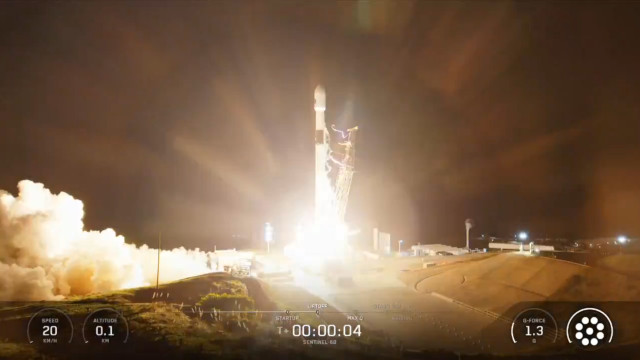
The Sentinel-6B satellite blasting off atop a Falcon 9 rocket (Image courtesy SpaceX)

A few hours ago, the Sentinel-6B satellite was launched atop a Falcon 9 rocket from the Vandenberg base. After about 57 minutes, it successfully separated from the rocket’s last stage and set off on its course to reach the polar orbit at 1,336 kilometers altitude where its scientific mission will begin, taking over from the Sentinel-6A Michael Freilich satellite, which was launched on November 21, 2020.

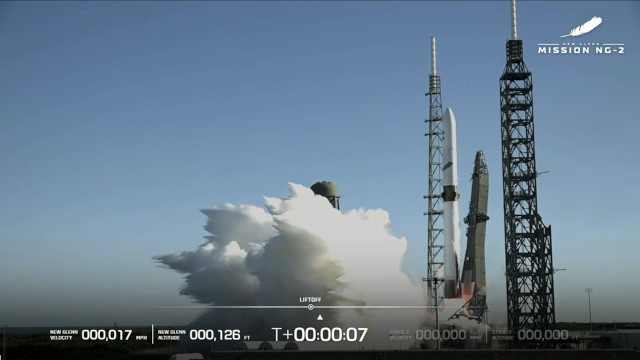
The ESCAPADE twin probes blasting off atop a New Glenn rocket (Image courtesy Blue Origin)

A few hours ago, NASA’s ESCAPADE (Escape and Plasma Acceleration and Dynamics Explorers) twin probes were launched atop a Blue Origin New Glenn rocket, which accomplished its mission, called NG-2. One goal for Blue Origin was to land the first stage, which was a successful one just over 9 minutes after launch. After approximately 33 minutes, the probes, named Blue and Gold, separated from the rocket’s second stage and began a long journey to Mars to study its magnetosphere and the Sun’s impact on the red planet.

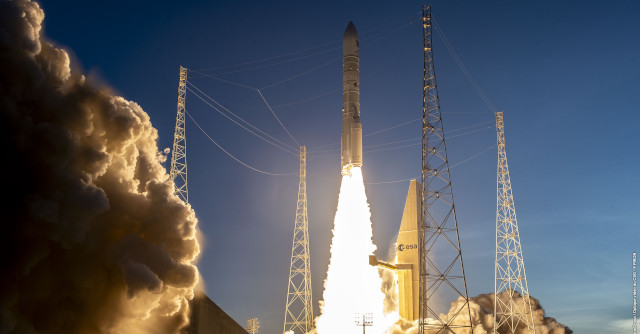
The Sentinel-1D satellite blasting off atop an Ariane 6 rocket (Photo courtesy ESA-CNES-ARIANESPACE/Optique vidéo du CSG–P. Piron. ESA Standard Licence)

A few hours ago, the Sentinel-1D satellite, part of the Copernicus / GMES, was launched from the Kourou spaceport, in French Guiana, atop an Ariane 6 rocket. After about 34 minutes, the satellite regularly separated from the rocket’s last stage and started sending signals. Its final orbit in low Earth orbit will be at an altitude of about 693 kilometers.

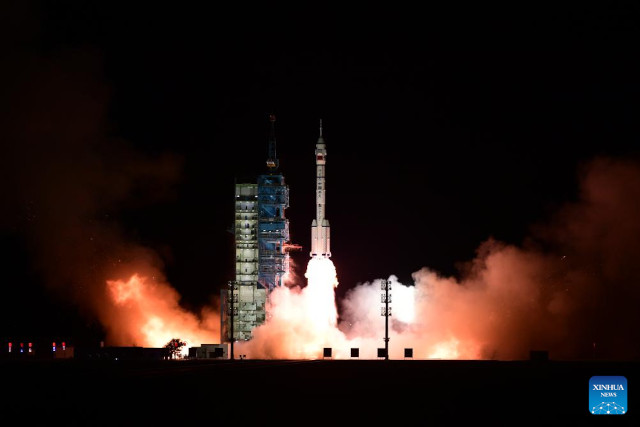
The Shenzhou 21 spacecraft blasting off atop a Long March-2F rocket (Photo courtesy Xinhua)

A confirmation has arrived that three Chinese taikonauts from the Shenzhou 21 mission reached the Chinese space station Tiangong with an automated docking maneuver. They blasted off about 3.5 hours earlier atop a Long March-2F rocket from the Jiuquan Satellite Launch Center. They form the 10th crew of the Chinese space station and will remain there for about six months, the standard duration for a mission.

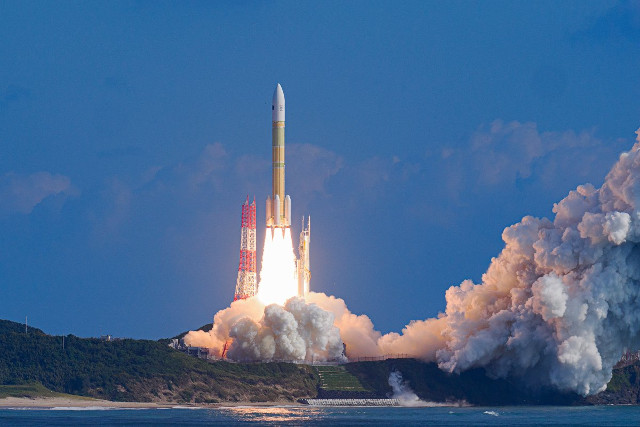
The HTV-X1 cargo spacecraft blasting off atop a H3-24W rocket (Photo courtesy JAXA)

A few hours ago, the HTV-X1 spacecraft blasted off atop a H3-24W rocket from the Tanegashima space center in Japan for a resupply mission to the International Space Station. A little more than 14 minutes after the launch, the cargo spacecraft separated regularly from the rocket’s last stage, entered its preliminary orbit, and deployed its solar panels and navigation antennas. It’s the new Japanese cargo spacecraft HTV-X’s maiden launch.