Launches

SpaceX Crew Dragon Endeavor starting its Ax-1 mission blasting off atop a Falcon 9 rocket (Image NASA TV)

A little while ago, the SpaceX Crew Dragon Endeavor spacecraft blasted off atop a Falcon 9 rocket from the Kennedy Space Center in the Axiom Mission 1 or simply Ax-1 mission. After about twelve minutes it successfully separated from the rocket’s last stage. It will spend approximately 10 days in orbit which includes 8 days on the International Space Station. Unlike the private space missions conducted last year, the Ax-1 also has commercial purposes in a collaboration between SpaceX, Axiom Space, and NASA to access the Station for the purpose of conducting work useful for the development of new technologies and scientific research.

The Soyuz MS-21 spacecraft (at the center) docked with the International Space Station (Image NASA TV)

A few hours ago, the Soyuz MS-21 spacecraft was launched from the Baikonur Cosmodrome in Kazakhstan and after a little more than three hours reached the International Space Station with three new crew members on board. It docked with the Station’s Prichal module. As is becoming increasingly common for crewed trips as well, the ultra-fast track was used which halves the journey duration.

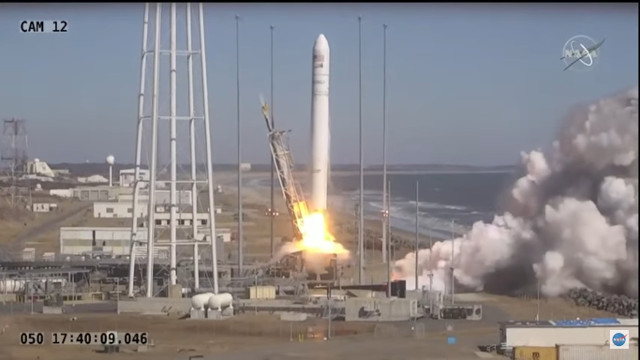
The Cygnus S.S. Piers Sellers cargo spacecraft blasting off atop an Antares rocket (Image NASA TV)

A little while ago, Northrop Grumman’s Cygnus spacecraft blasted off atop an Antares rocket from the Mid-Atlantic Regional Spaceport (MARS), part of NASA’s Wallops Flight Facility (WFF) on Wallops Island. After about nine minutes it successfully separated from the rocket’s last stage went en route to its destination. This is its 17th official mission, called NG-17 or CRS NG-17, to transport supplies to the International Space Station for NASA.

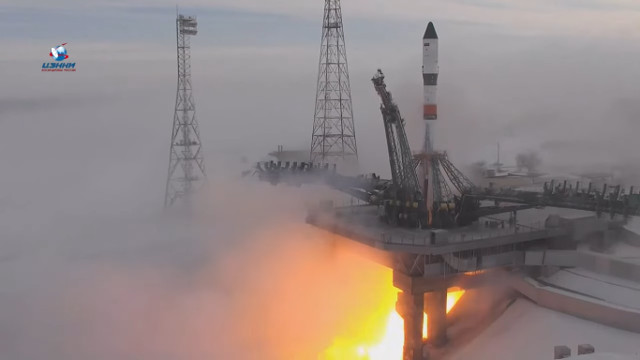
The Progress MS-19 cargo spacecraft blasting off atop a Soyuz-2.1a rocket (Image courtesy Roscosmos)

A few hours ago, the Progress MS-19 spacecraft blasted off atop a Soyuz-2.1a rocket from the Baikonur Cosmodrome in Kazakhstan. After about nine minutes it successfully separated from the rocket’s last stage and was placed on its route. The cargo spacecraft began its resupply mission to the International Space Station also called Progress 80 or 80P. In this mission, the route used is the one that requires about two days.

The James Webb Space Telescope blasting off atop an Ariane 5 ECA rocket (Image NASA TV)

A little while ago, the James Webb Space Telescope was launched atop an Ariane 5 ECA rocket from the Kourou base, French Guiana. After about 27 minutes it successfully separated from the rocket’s last stage and began its journey to the area known as L2, about 1.5 million kilometers from Earth. During the journey, its structure will be deployed and instrument tests and calibrations will begin. That’s a long preparation phase that will continue even after the telescope has reached its destination. The launch has put a strain on the possibilities of one of the most powerful and reliable rockets available but was only the first in a series of critical steps required to begin the work of this extremely sophisticated instrument.