Launches

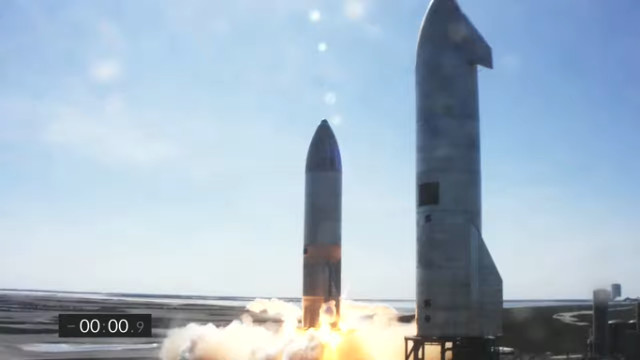
Starship SN10 blasting off (Image courtesy SpaceX)

It was afternoon in the USA when SpaceX conducted the flight test of the Starship prototype identified as SN10 in Boca Chica, Texas, the third after the one conducted on February 2, 2020. SpaceX engineers made some refinements to the SN10 to solve the problems that led to the crash of the previous prototypes. SN10 also made a regular flight up to an altitude of about 10 kilometers and then attempted a controlled landing at the end of a series of maneuvers, and this time was successful. Staff and fans watching the test had a few minutes to cheer, then SN10 exploded for reasons yet to be determined. The test was a success, but there’s still work to be done on Starship.

The Cygnus Katherine Johnson cargo spacecraft blasting off atop an Antares rocket (Image NASA TV)

A little while ago, Northrop Grumman’s Cygnus spacecraft blasted off atop an Antares rocket from the Mid-Atlantic Regional Spaceport (MARS), part of NASA’s Wallops Flight Facility (WFF) on Wallops Island. After about nine minutes it successfully separated from the rocket’s last stage went en route to its destination. This is its 15th official mission, called NG-15 or CRS NG-15, to transport supplies to the International Space Station for NASA.

The Progress MS-16 spacecraft blasting off atop a Soyuz-2.1a rocket (Image NASA TV)

A few hours ago, the Progress MS-16 spacecraft blasted off atop a Soyuz-2.1a rocket from the Baikonur Cosmodrome in Kazakhstan. After about nine minutes it successfully separated from the rocket’s last stage and was placed on its route. The cargo spacecraft began its resupply mission to the International Space Station also called Progress 77 or 77P. In this mission, the route used is the one that requires about two days.

Starship SN9 blasting off (Image courtesy SpaceX)

It was afternoon in the USA when SpaceX conducted in Boca Chica, Texas, the flight test of the Starship prototype identified as SN9, the second after the one conducted on December 9, 2020. SN9 was supposed to solve the problems of the previous prototype and it too carried out regularly its flight up to an altitude of about 10 kilometers and then attempted a controlled landing at the end of a series of maneuvers. After 6 minutes and 26 seconds of flight, like its predecessor, SN9 landed too fast and was destroyed as a result. SpaceX confirmed that its good results with regards to Starship’s maneuverability, but landing is still an issue. With the many first-stage landings of the Falcon 9 rocket, it’s making that kind of maneuver look easy, but it requires perfect systems tuning.

Starship SN8 blasting off (Image courtesy SpaceX)

It was afternoon in the USA when SpaceX conducted the first flight test of a prototype of Starship, the one identified as SN8, in Boca Chica, Texas. Equipped with 3 Raptor engines, SN8 flew regularly up to an altitude of approximately 12.5 kilometers, then attempted a controlled landing at the end of a series of maneuvers. During the ascent it remained in a vertical position while during the descent it carried out various maneuvers that brought it to a horizontal position almost to the ground, where it turned over. However, after 6 minutes and 42 seconds of flight, SN8 landed too fast and was consequently destroyed. Despite the ending, the test was in many ways really positive.