Launch vehicles

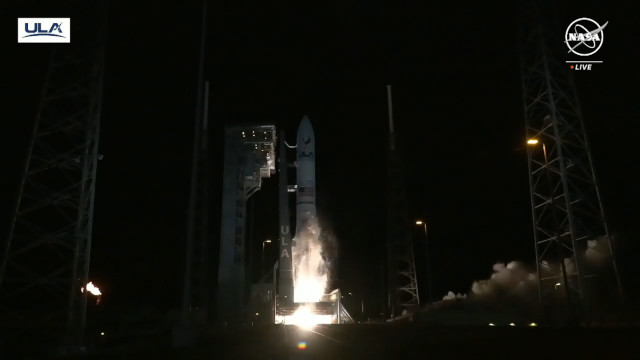
The Vulcan rocket blasting off (Image NASA TV)

A little while ago, ULA’s Vulcan rocket launched on its maiden mission, formally designated as CERT-1. For the occasion, it was carrying Astrobotic Technology’s Peregrine Moon lander, which separated from the rocket stage called Centaur after about 50 minutes. A capsule containing ashes of various famous people was also launched into a heliocentric orbit. The Centaur continued its mission with a few burns and cut-offs of its engine until it goes out of Earth orbit, scheduled after just under 4.5 hours from the launch.

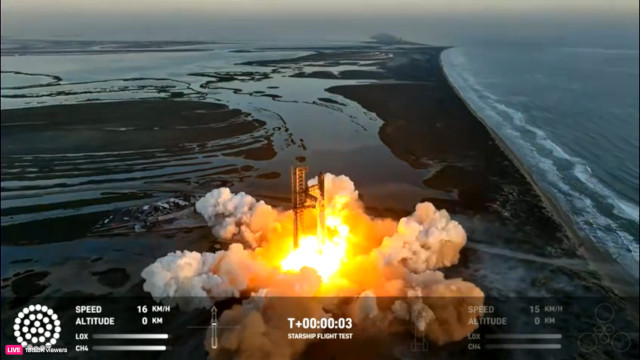
Super Heavy Booster 8 and Starship 25 blasting off (Image courtesy SpaceX)

SpaceX conducted a new flight test of its Super Heavy rocket and Starship prototypes, launched from its base in Boca Chica, Texas. This is the second test involving the entire system of Elon Musk’s company which is supposed to revolutionize space travel with an unprecedented transport capacity and being totally reusable. In this case, however, they are prototypes with the Super Heavy identified as Booster 9 and the Starship identified as Starship 25 or Ship25 or simply S25. Despite the upgrades, they don’t have the safety requirements required to conduct controlled landings. After the first test conducted on April 20, many changes were made to the Super Heavy and Starship systems but also to the launch pad.

Super Heavy Booster 7 blasting off with Starship 24 atop (Image courtesy SpaceX)

SpaceX conducted the flight test of its prototype Super Heavy rocket and Starship, launched from Boca Chica, Texas. This is the first test that saw the whole system of Elon Musk’s company which should revolutionize space travel with an unprecedented transport capacity and being totally reusable. In this case, however, these are prototypes with the Super Heavy identified as Booster 7 and Starship identified as Starship 24 or Ship24 or simply S24 which don’t have the safety requirements needed to conduct controlled landings. The test ended after almost 4 minutes with the explosion of both vehicles.

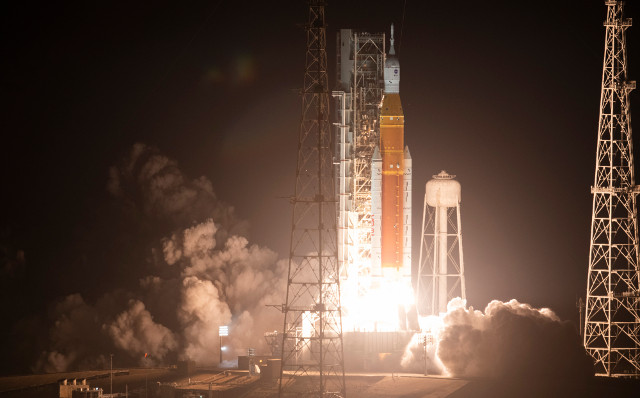
The Orion spacecraft blasting off atop the SLS to start the Artemis I mission (Photo NASA/Joel Kowsky)

A little while ago, NASA’s Orion spacecraft separated from the last stage, called the ICPS (Interim Cryogenic Propulsion Stage), of the Space Launch System (SLS), which blasted off almost two hours earlier from the Kennedy Space Center. The Orion entered the trajectory that will take it into the Moon’s orbit to carry out its mission which will last about 25 days. This is the first launch for the SLS and for the Orion in its full configuration. The ICPS also has the secondary mission of putting some CubeSat-class nanosatellites into orbit.

The Vega-C rocket blasting off for its maiden mission (Image courtesy ESA)

A little while ago, the new European Vega-C rocket, the evolution of the Vega rocket that was in service for almost exactly 10 years, blasted off from the European launch base in French Guayana. After about 85 minutes, various satellites started being put into orbit including LARES-2 for the Italian Space Agency and some nanosatellites.

The main payload for the first flight of the Vega-C carrier rocket, referred to as VV21, is the LARES-2 (Laser Relativity Satellite 2) satellite of ASI (Italian Space Agency). It’s an improved successor to the LARES satellite launched on February 13, 2012, during the original Vega rocket’s qualification flight. The aim remains to test some aspects of the theory of relativity.

The secondary payload consists of CubeSat-class nanosatellites, which are now very common and consequently normal cargoes for a launch vehicle like Vega-C. These are the Italian AstroBio CubeSat and Greencube, the Slovenian Trisat-R, and the French MTCube-2 and Celesta.