


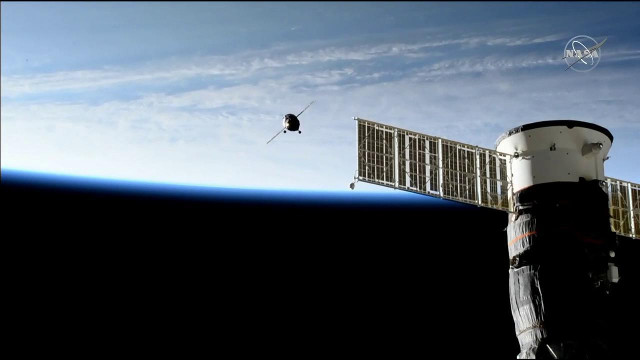
The Russian spacecraft Soyuz MS-14 has reached the International Space Station
A few hours ago the Soyuz MS-14 spacecraft, which blasted off about last Wednesday from the Baikonur Cosmodrome in Kazakhstan, has reached the International Space Station. The integration test with the Soyuz 2.1a rocket was successful and the spacecraft reached its destination, even if it’s a few days late after the first docking attempt had to be aborted.

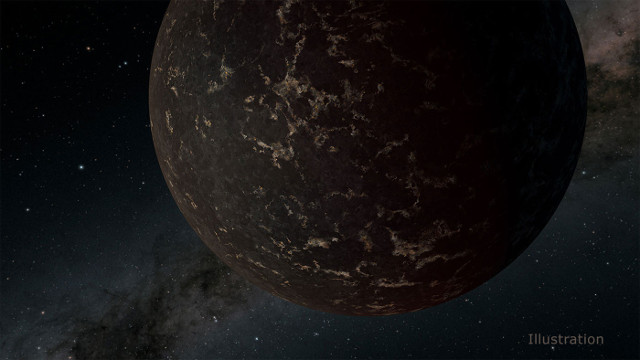
The exoplanet LHS 3844b is probably a super-Mercury
An article published in the journal “Nature” reports a study of the exoplanet LHS 3844b, a super-Earth discovered in 2018 thanks to NASA’s TESS space telescope. For this targeted study, a team of researchers led by Laura Kreidberg of the Harvard and Smithsonian Center for Astrophysics used the Spitzer space telescope to examine its surface and see if it had an atmosphere. The result is that LHS 3844b probably doesn’t have an atmosphere or it’s very thin and is perhaps covered by materials of volcanic origin such as the lunar “mare”. In essence, more than a super-Earth it could be a super-Mercury.


The docking attempt of the Russian spacecraft Soyuz MS-14 to the International Space Station was aborted
A few hours ago the Soyuz MS-14 spacecraft, which blasted off about two days ago from the Baikonur Cosmodrome in Kazakhstan, attempted to dock with the International Space Station but a communications problem forced to abort the maneuver. Cosmonauts Alexey Ovchinin and Alexander Skvortsov are working together with the Russian space agency Roscosmos to retry the docking on Monday while the Soyuz MS-14 remains at a safe distance.

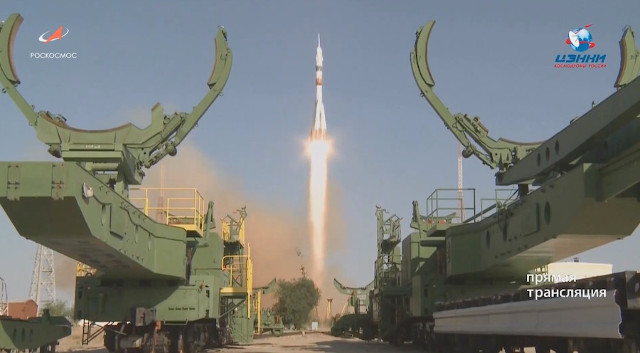
A success for the test launch of the Russian spacecraft Soyuz MS-14 to the International Space Station
A few hours ago the Soyuz MS-14 spacecraft blasted off atop a Soyuz 2.1a rocket from the Baikonur Cosmodrome in Kazakhstan. After about nine minutes it successfully separated from the rocket’s last stage and was placed on its route that will take it to the International Space Station in about two days.
