June 2019

A solution to the mystery of the formation of the exoplanet CI Tauri b

An article to be published in “Astrophysical Journal Letters” offers a solution to the mystery of the formation of the exoplanet CI Tauri b, a very young hot Jupiter that contradicts the models that predict that a gas giant is supposed to take at least 10 million years to form. A team of researchers used the IGRINS spectrograph to observe that exoplanet and the data collected suggest that it formed with the mechanism called hot start in jargon in which a gravitational instability is a key element in the quick formation of gas giant planets. Astronomers Christopher Johns-Krull of Rice University and Lisa Prato of the Lowell Observatory, among the authors of the research, presented these conclusions at the 234th meeting of the American Astronomical Society.

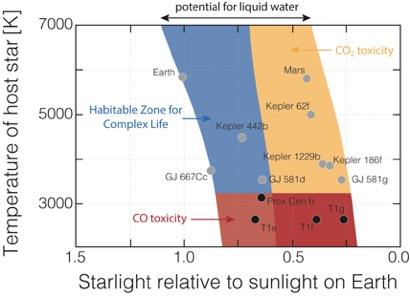
The presence of toxic gases could limit the habitability of rocky exoplanets

An article published in the journal “The Astrophysical Journal” offers a new definition of the habitable zone of ​​a star system where a planet that can accommodate life forms similar to the Earth’s can orbit. A team of researchers coordinated by the University of California – Riverside examined the available data on the atmospheres of exoplanets with orbits in what until now has been considered the habitable zone discovering that in most cases there’s an amount of carbon dioxide and carbon monoxide toxic for complex life forms as we know them. In essence, the new definition significantly reduces the habitable zone.

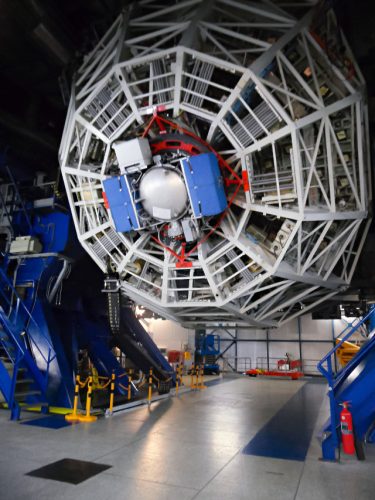
The NEAR instrument (Photo ESO/ NEAR Collaboration)

The NEAR (Near Earths in the AlphaCen Region) instrument mounted on the ESO VTL in Chile saw the so-called first light, which means that it made its first observation after being activated. This instrument is designed to detect exoplanets in the Alpha Centauri system, made up of two stars which, together with their farther and smaller companion Proxima, are the closest to the Sun at a distance of about 4.3 light years. ESO collaborated in this project with the Breakthrough Watch program.

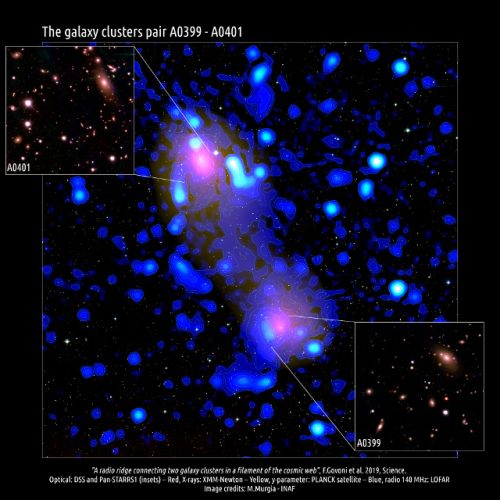
A cosmic aurora between the Abell 0399 and Abell 0401 galaxy clusters

An article published in the journal “Science” reports the identification of electromagnetic fields along a filament that crosses the approximately 10 million light years between the Abell 0399 and Abell 0401 galaxy clusters. A team of researchers led by Federica Govoni of the National Institute of Astrophysics, Cagliari, used the Low Frequency Array (LOFAR) radio telescope to carry out for the first time measurement of such a structure in radio waves.

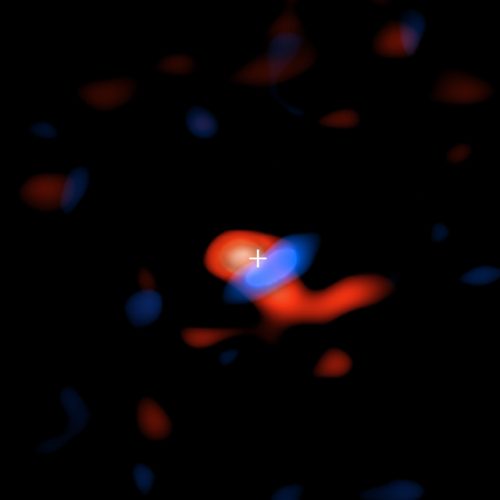
A "cool" gas disk detected around the supermassive black hole at the center of the Milky Way

An article published in the journal “Nature” reports the detection of an interstellar gas disk around Sagittarius A*, the supermassive black hole at the center of the Milky Way. A team of researchers led by Elena Murchikova of the American University of Princeton found thanks to the ALMA radio telescope the radio emissions of the least hot component of the accretion disk that surrounds Sagittarius A*. By mapping those emissions it was possible to notice that disk’s rotation, another useful piece of data to study the processes taking place around that black hole.