Space Stations

Blogs about Space Stations

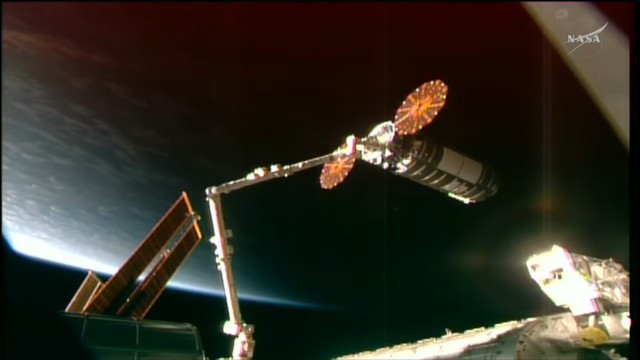
The Cygnus XL cargo spacecraft captured by the Canadarm2 robotic arm in its NG-24 mission (Image NASA)

Yesterday, Northrop Grumman’s Cygnus XL spacecraft, launched last Saturday, April 11, reached the International Space Station and was captured by the Canadarm2 robotic arm. Astronaut Jack Hathaway, assisted by his colleague Chris Williams, conducted the slow maneuver to move the Cygnus until it docked with the Station’s Unity module after about two hours.

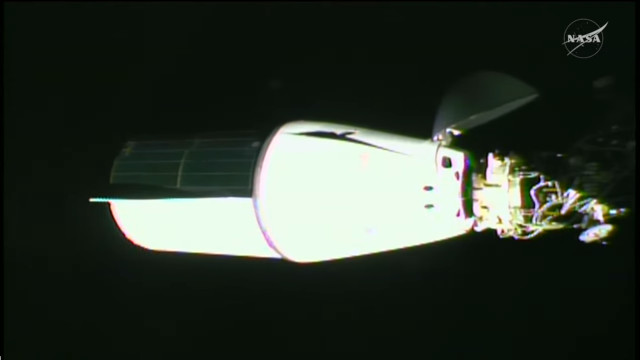
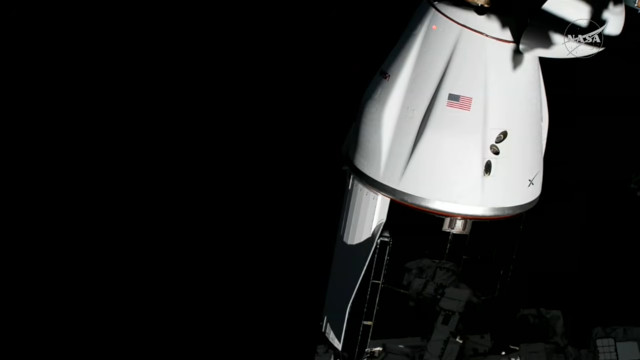
Views of the Crew Dragon Freedom spacecraft docking with the International Space Station in its Crew-12 mission (Image NASA+)

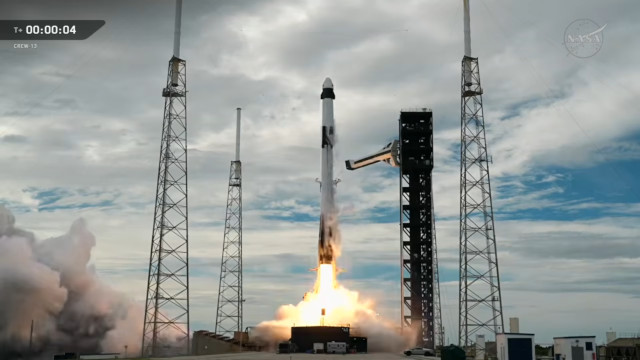
A few hours ago, SpaceX’s Crew Dragon Freedom spacecraft docked with the Harmony module of the International Space Station, completing the first part of its Crew-12 or SpaceX Crew-12 mission that began with its launch about 34 hours earlier. After checking that the pressure gets properly balanced, the hatch will be opened to allow Andrey Fedyaev, Jack Hathaway, Jessica Meir, and Sophie Adenot to enter the Station and start their mission.

The crew of the Soyuz MS-28 spacecraft: Chris Williams, Sergey Kud-Sverchkov, and Sergey Mikaev (Photo courtesy of GCTC)

A few hours ago, the Soyuz MS-28 spacecraft was launched from the Baikonur Cosmodrome in Kazakhstan and, after a little more than three hours, reached the International Space Station with three new crew members on board. It docked with the Station’s Rassvet module. The ultra-fast track was used, which halves the journey duration and is used whenever the Station’s position makes it possible.

The Shenzhou 21 capsule after landing (Photo courtesy Wang Jiangbo/Xinhua)

A few hours ago, the three Chinese taikonauts from the Shenzhou 20 mission returned to Earth after spending 204 days on the Tiangong space station, where they arrived on April 24, 2024. The three taikonauts—Chen Dong, Chen Zhongrui, and Wang Jie—had left the station about 3.5 hours earlier to land at a site called Dongfeng in China’s Inner Mongolia Autonomous Region. The three taikonauts returned aboard the Shenzhou 21 spacecraft because the Shenzhou 20 spacecraft suffered tiny fractures in a window following the impact of what was likely space debris and was deemed unsafe for human transportation.

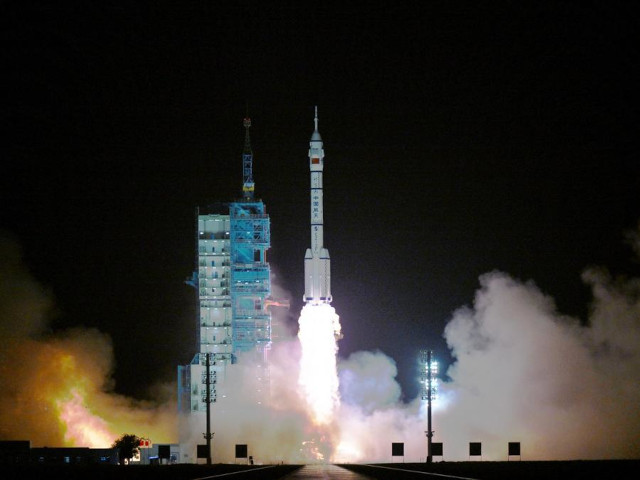
The Shenzhou 21 spacecraft blasting off atop a Long March-2F rocket (Photo courtesy Xinhua)

A confirmation has arrived that three Chinese taikonauts from the Shenzhou 21 mission reached the Chinese space station Tiangong with an automated docking maneuver. They blasted off about 3.5 hours earlier atop a Long March-2F rocket from the Jiuquan Satellite Launch Center. They form the 10th crew of the Chinese space station and will remain there for about six months, the standard duration for a mission.