Spacecraft

Blogs about spacecraft

The Soyuz MS-27 spacecraft's capsule surrounded by the support crew (Image NASA+)

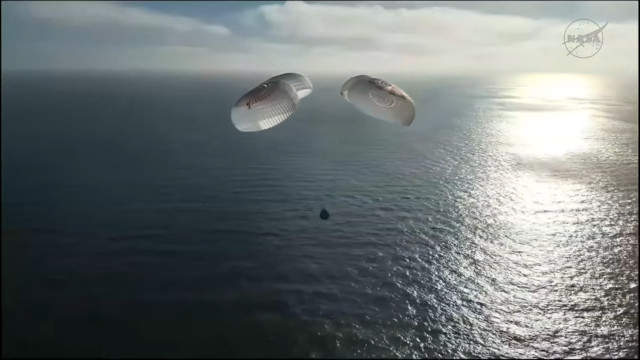
A little while ago, cosmonauts Sergey Kud‑Sverchkov and Sergei Mikaev and astronaut Chris Williams returned to Earth on the Soyuz MS-28 spacecraft, which landed in Kazakhstan. They had reached the International Space Station on November 27, 2025, as part of a normal crew rotation. The capsule landed on its side, an event that can occur due to reentry conditions, but the crew members suffered no injuries.

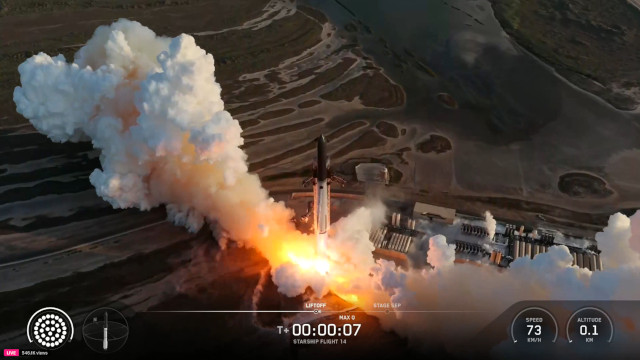
Starship 40 lifts off atop the Super Heavy 20 (Image courtesy of SpaceX)

It was the afternoon in the USA when SpaceX conducted a new flight test of its Super Heavy rocket and Starship prototypes, launched from its base in Boca Chica, Texas. This is the 13th test involving the entire system of Elon Musk’s company, which is supposed to revolutionize space travel with an unprecedented transport capacity and be totally reusable. They are advanced prototypes with the Super Heavy identified as Booster 20 and the Starship identified as Starship 40 or Ship40 or simply S40. It was the second test of the vehicles in their Block 3 version.

The Soyuz MS-29 spacecraft approaching the International Space Station (Image NASA+)

A few hours ago, the Soyuz MS-29 spacecraft was launched from the Baikonur Cosmodrome, Kazakhstan, and, after a little more than three hours, reached the International Space Station with three new crew members on board. It docked with the Station’s Prichal module. The ultra-fast track was used, which halves the journey duration and is used whenever the Station’s position makes it possible.

The Starfall Demo capsule blasting off atop a Falcon 9 rocket (Image courtesy SpaceX)

A little while ago, SpaceX’s Starfall Demo mission began with the launch of a capsule atop a Falcon 9 rocket from Cape Canaveral. The mission has a classified profile, meaning the launch broadcast ended after the first stage landed. Subsequently, the capsule successfully separated from the rocket’s last stage and embarked on its course, which should take it into low Earth orbit for a period that wasn’t revealed and then splash down in the Pacific Ocean. This mission aims to demonstrate the feasibility of returning cargo weighing up to 1,000 kilograms produced in orbit to Earth, or even transporting payloads very quickly to other continents.