2019

Jeff Bezos with a Blue Moon mockup (Photo courtesy Blue Origin. All rights reserved)

Yesterday in an event presented by himself, the aerospace company Blue Origin’s owner Jeff Bezos revealed the project of a lunar lander capable of transporting up to 6,500 kg of cargo but also human beings to the Moon and to transport cargoes and astronauts from the Moon to the Earth called Blue Moon. The goal is to offer his help in the return of American astronauts to the Moon and subsequently to create there a permanent human presence.

A study of gravity waves in blue supergiant stars

An article published in the journal “Nature Astronomy” reports the discovery that almost all blue supergiant stars show a shimmer in brightness on their surface. A team of researchers coordinated by the Katholieke Universiteit (KU) of Leuven, Belgium, used both observations made with NASA’s Kepler and TESS space telescopes and computer simulations based also on asteroseismology to study them thanks to the fact that that shimmer is caused by the presence of gravity waves on the surface of those very massive stars.

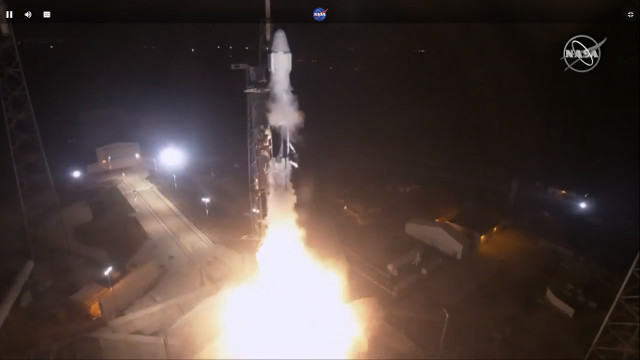
The Dragon space cargo ship starting its CRS-17 mission blasting off atop a Falcon 9 rocket (Image NASA TV)

A little while ago the SpaceX Dragon spacecraft blasted off atop a Falcon 9 rocket from Cape Canaveral in its CRS-17 (Cargo Resupply Service 17) mission, also referred to as SPX-17. After just over ten minutes it separated successfully from the rocket’s last stage and went en route. This is the 17th mission for the Dragon spacecraft to resupply the International Space Station with various cargoes and then return to Earth, again with various cargoes.

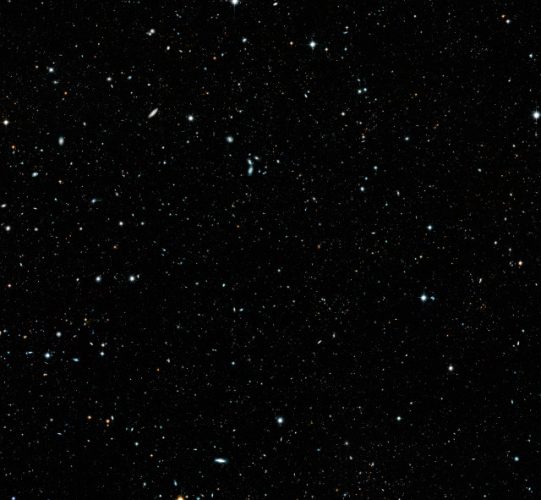
Thousands of images from the Hubble Space Telescope provide a wide view of the universe and its history

A mosaic of images created by combining 7,500 images captured by the Hubble Space Telescope offers a portrait of a part of the universe containing 265,000 galaxies up to 13.3 billion light years away, which means that we see the most distant of them as they were about 500 million years after the Big Bang. The result was named the Hubble Legacy Field and also combines observations taken from various deep field campaigns of the past years at wavelengths ranging from ultraviolets to near infrareds. It also shows the universe that evolves over time.