
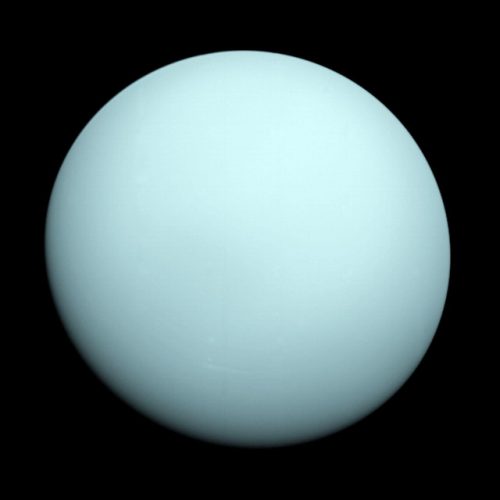
The Voyager 2 space probe found a plasmoid in Uranus’ magnetosphere
An article published in the journal “Geophysical Research Letters” reports the discovery of a plasmoid, a structure composed of plasma formed mainly of hydrogen in the midst of magnetic fields, in the magnetotail – the magnetosphere’s tail – of the planet Uranus that was moving away from it. The plasmoid’s formation isn’t a new event because Gina DiBraccio and Daniel J. Gershman of NASA’s Goddard Space Flight Center examined the observations made by the Voyager 2 space probe during the its Uranus flyby on January 24, 1986. It’s the first plasmoid discovered in the Uranus’ atmosphere and could be a crucial mechanism for its loss of atmosphere.
