
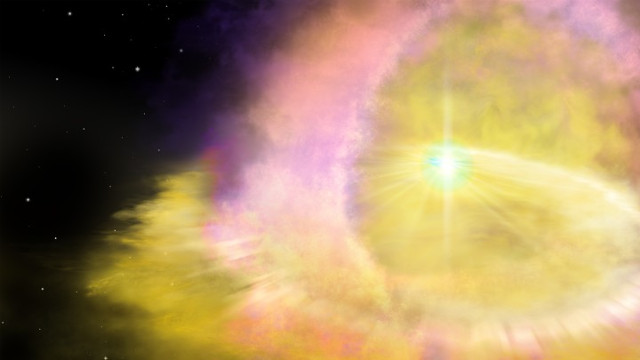
A study on the supernova SN2016aps, the brightest ever recorded
An article published in the journal “Nature Astronomy” reports a study on the supernova cataloged as SN2016aps, which was found to be at least twice as bright and probably much more massive than any other registered supernova. A team of astronomers led by Dr. Matt Nicholl of the British University of Birmingham observed the evolution of the supernova for about two years until it faded to 1% of its peak brightness. The conclusion is that the initial mass of the exploded star might have been even more than 100 times the Sun’s and this suggests that it was a very rare type called a pulsational pair-instability supernova.
