
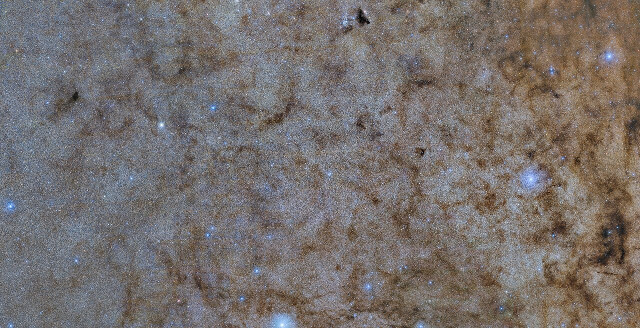
A study of the old stars in the heart of the Milky Way
Two articles published in the journal “Monthly Notices of the Royal Astronomical Society” report different aspects of a research on what is commonly called the bulge, a large group of stars in the central area of the Milky Way. A team of researchers used the Dark Energy Camera (DECam) to conduct observations of the bulge, with its 250 million stars among which in particular the ultraviolet emissions of the ones in the cluster known as red clump were detected because it’s formed by red giants. By analyzing their emissions it was possible to find the spectroscopic traces of the chemical elements inside more than 70,000 stars. The red giants near the center of the Milky Way showed a very similar composition indicating that they formed around the same time, over 10 billion years ago.
