
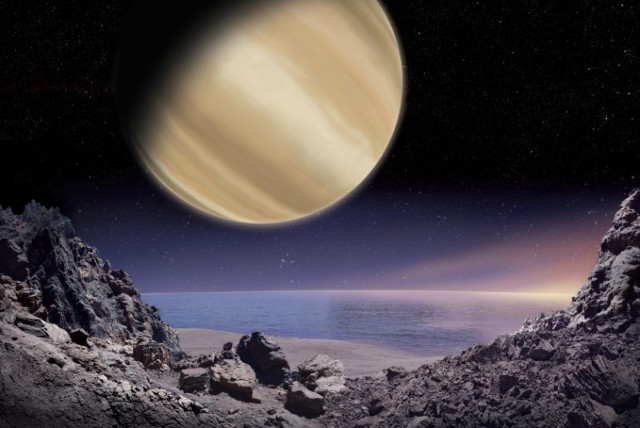
An article published in the journal “Astronomy and Astrophysics” reports the discovery of 26 planetary systems within the TAPAS (Tracking Advanced Planetary Systems) project. A team of researchers led by Professor Andrzej Niedzielski of the Institute of Astronomy at the NCU (Nicolaus Copernicus University) in Torun, Poland, used over a decade of observations with the Hobby-Eberly Telescope and the Galileo National Telescope to locate the traces of exoplanets around old stars, mostly now red giants, the last phase of their life. For their masses very similar to the Sun’s, three stars in particular have been defined as the Sun’s elder sisters.
In less than thirty years, our knowledge of exoplanets has increased exponentially thanks to the discovery of some thousand of them. The identification of new exoplanets is no longer news unless they’re passed off as the Earth’s twins, but there are cases that are very interesting from a scientific point of view.
The study of old stars, even in the red giant stage, is a frontier and can help better understand the evolution of a planetary system and the interaction between stars and planets at the end of a star’s life. The TAPAS project focused on this type of study and Professor Andrzej Niedzielski, together with his collaborators, made interesting discoveries.
This study is the most recent, but announcements of various discoveries within the TAPAS project have been coming in for years. Paradoxically, the most famous discovery concerns the system of the BD+14 4559 red dwarf, a very different type of star, because the star was named Solaris after Stanislaw Lem’s novel, and the exoplanet discovered around it, formally classified as BD+14 4559 b, was named Pirx after the protagonist of a series of stories written by Lem too.
For this study, Professor Andrzej Niedzielski’s team focused on a group of 122 stars. Observations were conducted using the High Resolution Spectrograph (HRS) instrument on the Hobby Eberly Telescope (HET) and the HARPS-N (High Accuracy Radial velocity Planet Searcher in North hemisphere) instrument on the Galileo National Telescope (TNG) for over a decade. In this case, the result was the identification of 26 planetary systems thanks to the radial velocity method.
In the case of the star system BD+02 3313, measurements made using the radial velocity method also suggest the presence of a low-mass companion. In this case, this suggests that it is a brown dwarf, what is called a failed star because it’s not massive enough to trigger nuclear fusion.
Among the stars that have been called the Sun’s elder sisters because they have a mass very similar to it but are much older, there are also HD 4760, HD 96992, and TYC 0434-04538-1. Exoplanets have been discovered around them.
About 1780 light-years from Earth, the star HD 4760 has a gas giant planet with a mass about 14 times Jupiter’s. Its distance from the star is slightly greater than the Earth’s from the Sun for a year estimated at around 434 Earth days.
Just over 2,000 light-years from Earth, the star TYC 0434-04538-1 has a gas giant planet with a mass about 6 times Jupiter’s. It’s quite close to its star for a year estimated at 193 Earth days.
Just over 1300 light-years from Earth, the star HD 96992 has a planet slightly larger than Jupiter whose year has an estimated duration of about 514 Earth days. It’s the system that has been studied the longest, for about 14 years.
Gas giant planets are the easiest to detect by the radial velocity method because they have the greatest influence on their star. In the case of stars that have entered the red giant phase, their expansion can tear the gas layers from those planets. It’s a very long process from the perspective of astronomers, but discovering such cases would increase our knowledge of what happens in a planetary system towards the end of a star’s life.
