March 2021

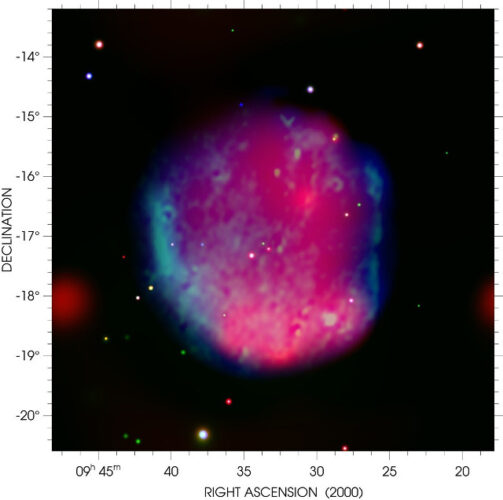
Hoinga in a composition of X-Ray and radio wave emissions

An article published in the journal “Astronomy & Astrophysics” reports the discovery of the largest supernova remnant in X-rays. A team of researchers used observations conducted with the Spektr-RG space telescope’s eROSITA instrument to create its first X-ray map of the sky to locate the traces of the supernova remnants that have been nicknamed Hoinga. The discovery was confirmed in radio frequency data from the CHIPASS survey conducted with the Parkes radio telescope.

Starship SN10 blasting off (Image courtesy SpaceX)

It was afternoon in the USA when SpaceX conducted the flight test of the Starship prototype identified as SN10 in Boca Chica, Texas, the third after the one conducted on February 2, 2020. SpaceX engineers made some refinements to the SN10 to solve the problems that led to the crash of the previous prototypes. SN10 also made a regular flight up to an altitude of about 10 kilometers and then attempted a controlled landing at the end of a series of maneuvers, and this time was successful. Staff and fans watching the test had a few minutes to cheer, then SN10 exploded for reasons yet to be determined. The test was a success, but there’s still work to be done on Starship.

The galaxy cluster around HDF850.1

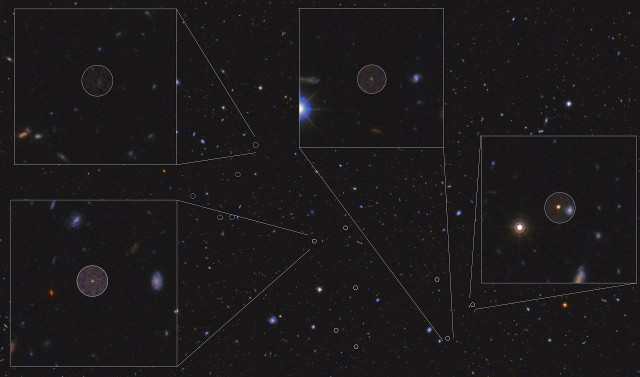
An article published in the journal “Monthly Notices of the Royal Astronomical Society” reports the discovery of the most densely populated galaxy cluster in formation in the early universe. A team of researchers used the OSIRIS instrument of the Gran Telescopio Canarias (GTC) to observe an area around the galaxy HDF850.1, already well known because it’s been the focus of various researches, discovering other protogalaxies. We see those galaxies as they were about 12.5 billion years ago, when the universe was very young, so this is a great discovery to study the birth and evolution of the largest structures in the universe.