
New confirmations that sub-Neptune planets can transform into super-Earths
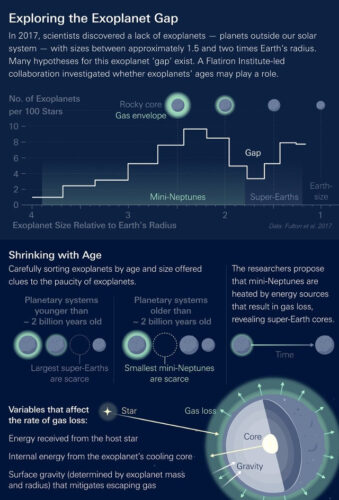
An article published in “The Astronomical Journal” reports a study on the scarcity of exoplanets with a radius between 1.5 and 2 times the Earth’s. A team of researchers led by Trevor David of the Flatiron Institute in New York studied what is commonly referred to as a radius gap using data collected by NASA’s Kepler Space Telescope. By dividing the exoplanets studied between those older than 2 billion years and those younger, the exam offers new information confirming the theory that sub-Neptunes can lose most of their atmosphere and transform into super-Earths even after billions of years.
