
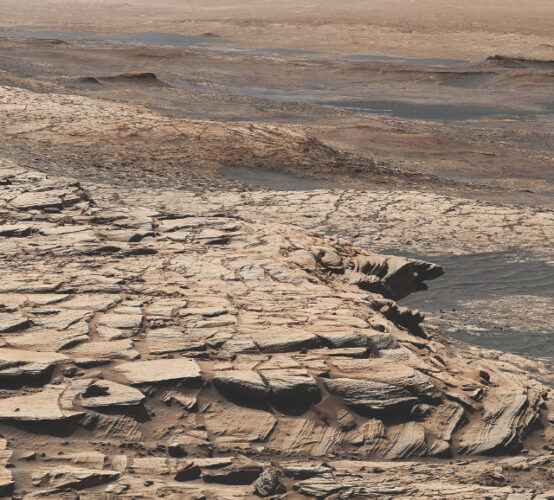
The analysis of the carbon contained in Martian samples is linked to the hypothesis of the presence of life forms
An article published in the journal “Proceedings of the National Academy of Sciences” reports the detection of samples rich in carbon-12, which on Earth is associated with biological processes, in Gale crater on Mars by NASA’s Mars Rover Curiosity. A team of researchers used the TLS instrument, part of Curiosity’s SAM mini-laboratory, to analyze the samples to check the amount of isotopes as well. The result is a limited presence in some samples of carbon-13 compared to that detectable in the atmosphere and in Martian meteorites. On Earth, such a result indicates that the sample was produced by some biological process. However, the researchers also offered alternative explanations related to non-biological processes.
