
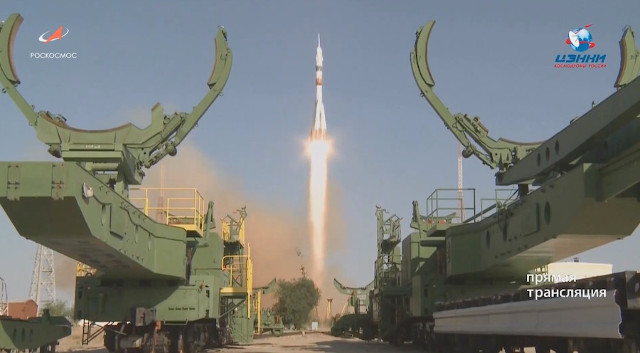
A few hours ago the Soyuz MS-14 spacecraft blasted off atop a Soyuz 2.1a rocket from the Baikonur Cosmodrome in Kazakhstan. After about nine minutes it successfully separated from the rocket’s last stage and was placed on its route that will take it to the International Space Station in about two days.
The Soyuz 2.1a rocket used for other Russian spacecraft missions such as the Progress cargo spacecraft. It allows to insert a spacecraft into an orbit with greater precision than the previous versions of this rocket. Instead, so far the Soyuz spacecraft used for manned mission were launched on Soyuz FG rockets. This test launch aims to verify the proper integration of the Soyuz spacecraft systems with the Soyuz 2.1a rocket and for this reason it was launched unmanned.
A crucial element of the integration concerns the launch abort system used to rescue the crew in the event of a rocket malfunction. The Soyuz 2.1a rocket performs maneuvers that are a bit different from the FG version so they needed to modify that system and this launch made it possible to verify that it didn’t get triggered by mistake.
The Soyuz spacecraft are used for transporting personnel and generally on board, on its way to the Station in when they come back to Earth, there are only small cargoes leaving the space cargo ship job to the Progress spacecraft. For the occasion, the Soyuz MS-14 spacecraft carries around 650 kg (about 1,450 pounds) of various cargoes instead of the crew and some life support systems that are useless in this mission.
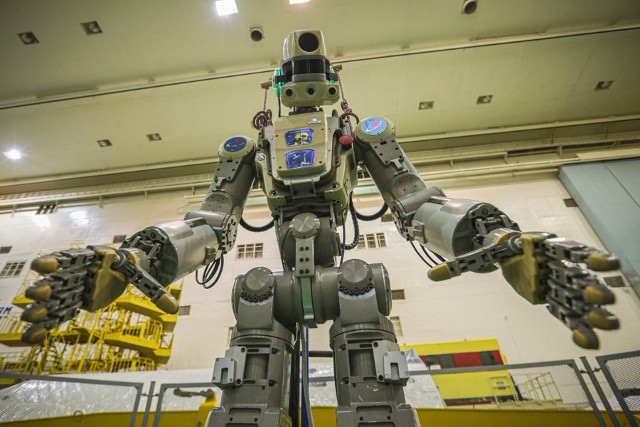
Actually, you could argue that there’s a passenger aboard the Soyuz MS-14 spacecraft, the Skybot F-850 robot, nicknamed FEDOR (final experimental demonstration object research). This Russian android was initially developed to help and in some cases replace human beings in rescue operations but later its use was extended to work in space and the real tests can start on the International Space Station.
The arrival of the Soyuz MS-14 spacecraft to the International Space Station is scheduled for Saturday, August 24 at 5.30 am UTC. It will use its on-board computer to perform an automated docking to the Poisk module.

Permalink