It was the night between Friday and Saturday in Japan when the Japanese space agency JAXA’s SLIM lander attempted to land on the Moon but things got complicated. Only after a couple of hours, a press conference was held in which it was announced that the Moon landing was successful but there were some problems that could shorten the mission if SLIM fails to recharge its batteries. Meanwhile, Japan has become the fifth nation to put a robotic vehicle on the Moon.
Launched on September 7, 2023, the SLIM (Smart Lander for Investigating Moon) lander entered lunar orbit on December 25, 2023. The mission’s priority was the need to reduce the small lander’s fuel consumption to a minimum, therefore the timeline for the Moon landing attempt was particularly long.
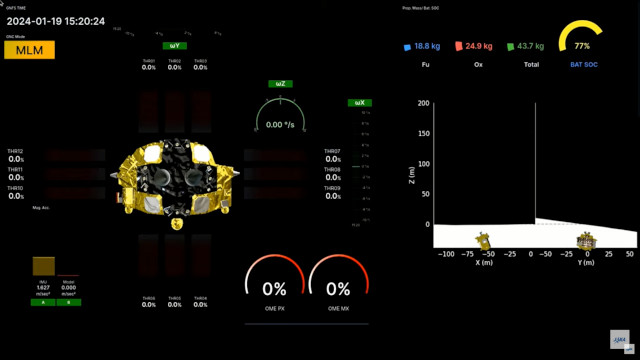
In the final phase, at JAXA’s mission control center, the simulation created from the telemetry data (Image courtesy JAXA. All rights reserved) made it possible to follow the SLIM lander’s descent maneuver toward the Moon’s surface. Eventually, it indicated that the Moon landing had occurred, but mission engineers were unable to determine whether the maneuver had been successful.
The broadcast of the event was terminated after attempts to check SLIM’s status by receiving radio signals failed to achieve results. The answer regarding the outcome of the Moon landing was postponed to the press conference which, after a couple of hours, confirmed that the Moon landing was successful but also revealed some problems for SLIM, which isn’t recharging its batteries.
One of the hypotheses offered immediately after the Moon landing was that SLIM had rolled and therefore its solar panels weren’t oriented towards the Sun. JAXA hopes that the investigations begun to try to understand the situation can provide definitive answers. It would be important to assess SLIM’s future.
A peculiarity of the SLIM lander is that the two small rovers on board, called LEV-1 and LEV-2, were released before completing the Moon landing maneuver, letting them fall onto the surface. They also serve to test technologies that JAXA intends to develop for future Moon missions. It was reported that both rovers are working properly, so from this point of view, the mission is a complete success.
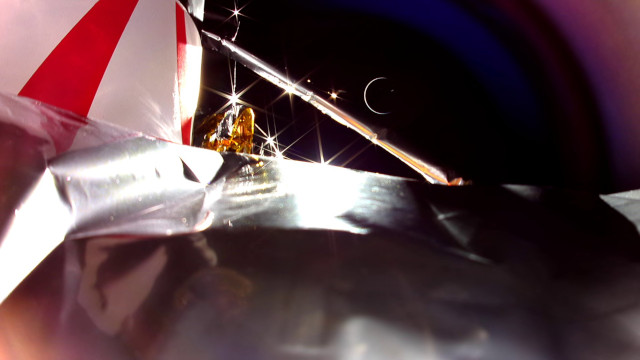
Meanwhile, Astrobotic Technology reported on Friday that it lost contact with its Peregrine lander. Developed as part of NASA’s Commercial Lunar Payload Services (CLPS) program, it was intended to be the first private lander to land on the Moon. Unfortunately, a serious problem had caused a propellant leak detected a few hours after its launch. It soon proved impossible to attempt to complete the mission, so the instruments that could provide useful data were activated for a few days. It was possible to bring Peregrine back to Earth and fall into the atmosphere, where it disintegrated harmlessly over the Pacific Ocean.
The very different results of the Peregrine and SLIM missions show that it’s still difficult to land a robotic vehicle on the Moon. Even a success may not be without problems and JAXA will examine all the data collected to understand what to change in the next missions but these are long-term plans regarding the exploration of the Moon.