Massimo Luciani

The Alpha Centauri system as seen by the James Webb Space Telescope on the left, a zoom of the two main stars in the center, and a further zoom on the right indicating the exoplanet candidate designated as S1.

Two articles accepted for publication in “The Astrophysical Journal Letters” report different aspects of the study that led to the possible discovery of a gas giant planet orbiting the star Alpha Centauri A. Astronomers used observations with the James Webb Space Telescope’s MIRI instrument to identify a light source whose characteristics make it a candidate exoplanet. The information gathered suggests it may be a gas planet similar in size to Jupiter, although its mass could be close to Saturn’s. If confirmed, it would be the closest exoplanet orbiting a Sun-like star in its system’s habitable zone.

The Crew Dragon Endurance spacecraft docked with the Harmony module of the International Space Station in its Crew-11 mission (Image NASA+)

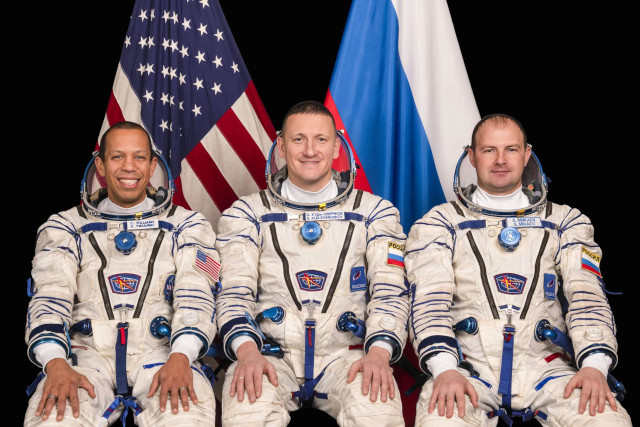
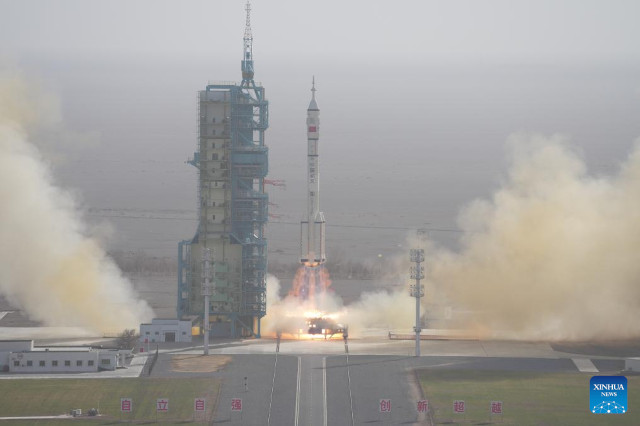
A little while ago, SpaceX’s Crew Dragon Endurance spacecraft docked with the Harmony module of the International Space Station, completing the first part of its Crew-11 or SpaceX Crew-11 mission that began with its launch about 15.5 hours earlier. After checking that the pressure gets properly balanced, the hatch will be opened to allow Oleg Platonov, Mike Fincke, Kimiya Yui, and Zena Cardman to enter the Station and start their mission, which could last even 8 months.

The TRACERS satellites blasting off atop a Falcon 9 rocket (Image SpaceX)

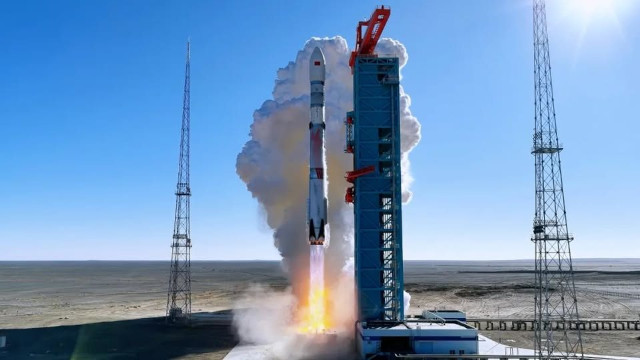
A few hours ago, NASA’s two TRACERS satellites were launched atop a SpaceX Falcon 9 rocket from the Vandenberg Air Force Base. After about an hour and 40 minutes, they successfully separated from the rocket’s last stage to begin the maneuvers that will place them in a Sun-synchronous orbit at an altitude of 600 kilometers.

The two TRACERS (Tandem Reconnection and Cusp Electrodynamics Reconnaissance Satellites) twin satellites join other space missions aimed at studying the Sun and its interactions with the Earth. The PUNCH mission was launched on March 12, and on March 15, the three CubeSat-class nanosatellites of the EZIE (Electrojet Zeeman Imaging Explorer) mission were launched. EZIE’s goal is to study changes in electrical currents moving through the upper layers of Earth’s atmosphere in the polar regions.

The Crew Dragon Grace spacecraft after splashing down (Image courtesy Axiom Space)

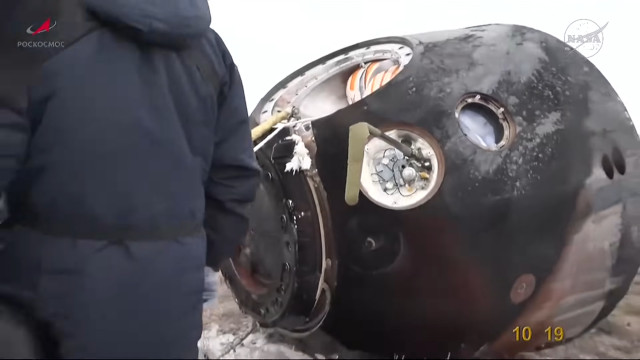
A little while ago, SpaceX’s Crew Dragon Grace spacecraft concluded its Ax-4 mission by splashing down without problems. On board were Shubhanshu Shukla, Peggy Whitson, Sławosz Uznański-Wiśniewski, and Tibor Kapu, who ended this completely private space mission in the Atlantic Ocean after leaving the International Space Station almost 48 hours earlier. Shortly after splashing down, SpaceX’s recovery ship went to retrieve the Grace and its crew to transport them to the coast.

The fading light of supernova SN 2025kg, followed by the fast X-ray transient EP 250108a, as seen by the Gemini North and South telescopes

Two articles accepted for publication in “The Astrophysical Journal Letters” report different aspects of the study of supernova SN 2025kg, which generated a so-called fast X-ray transient, a little-known event that in this case was cataloged as EP 250108a. This type of event has now been described as a sort of stifled-at-birth version of a gamma-ray burst.

Two teams of researchers with several members in common used data collected by two instruments on the Einstein Probe space telescope and other instruments to analyze the emissions from this supernova. This allowed them to propose an explanation for the fast X-ray transients (FXTs) and how they differ from gamma-ray bursts.