Space Probes

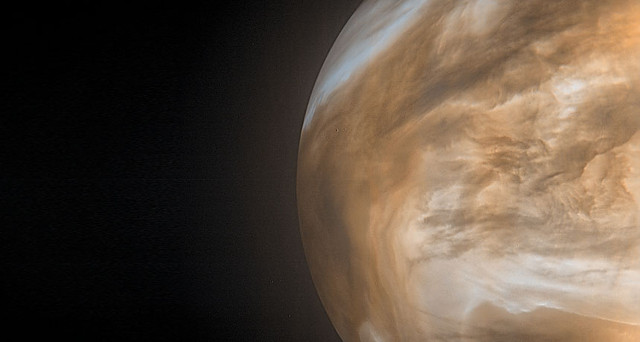
The night side of Venus seen by the Akatsuki space probe (Image courtesy JAXA / ISAS / DARTS / Damia Bouic)

An article accepted for publication in “The Astrophysical Journal” reports research that offers an alternative explanation to the presence of phosphine on Venus. A team of researchers used a robust model of the conditions in Venus’s atmosphere reanalyzing the data that led to the conclusion that there was phosphine. The new conclusion is that the data are consistent with the presence of sulfur dioxide.

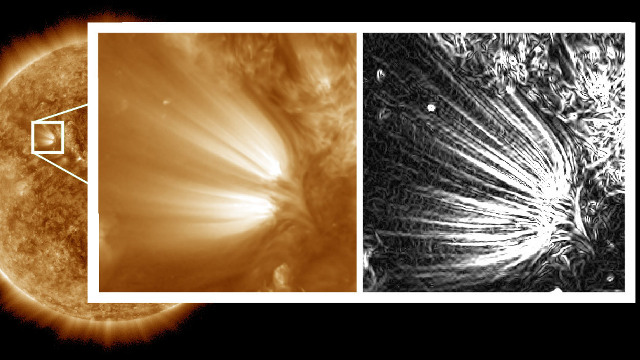
Sun's plumelets (Image NASA/SDO/Uritsky, et al)

An article published in “The Astrophysical Journal” reports a study on some structures that make up the solar plumes which are called plumelets in jargon. A team of researchers led by Vadim Uritsky of the Catholic University of America and NASA’s Goddard Space Flight Center applied cutting-edge image processing algorithms to NASA data to obtain unprecedented resolution images of solar plumelets. These structures are small but this study suggests they may play a crucial role in the solar wind, whose influence extends to the border with interstellar space.

A cross-section of Enceladus, showing a summary of the processes SwRI scientists modeled in the Saturn moon

An article published in the journal “Icarus” reports a study on the conditions under the surface of Saturn’s moon Enceladus, which indicate possible chemical processes that could support the metabolism of life forms. A team of researchers used data collected by the Cassini space probe to create a model of the chemical processes taking place in the Enceladus’ underground ocean, and concluded that there are possible redox chemical reactions that can fuel the metabolism of life forms.

Hot spots on Jupiter

New discoveries on the planet Jupiter made thanks to the work of NASA’s Juno space probe were presented at the American Geophysical Union’s fall conference, which was virtual this year. In particular, new information was collected regarding the so-called hot spots, areas of the Jovian atmosphere that are denser and warmer than expected. Juno made it possible to obtain data that suggests that they’re larger and deeper than previously thought. Another news on Jupiter is that the new cyclone discovered last year at the planet’s south pole has dissolved.

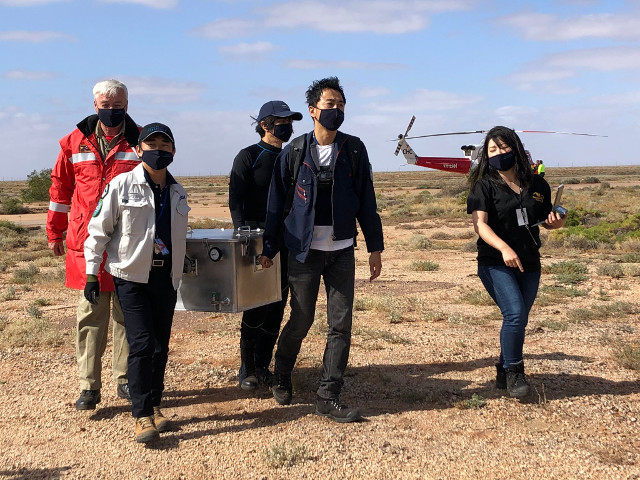
The samples from asteroid Ryugu after getting recovered (Photo courtesy JAXA. All rights reserved)

Yesterday, the Japanese space probe Hayabusa 2 released the capsule containing the samples taken from asteroid Ryugu to Earth. The capsule landed in Australia’s Woomera region. A few hours later, the space agency JAXA crew confirmed that they recovered the capsule and started preparations for its transport to the laboratory in Japan where it will be opened to start examining its contents.