Telescopes

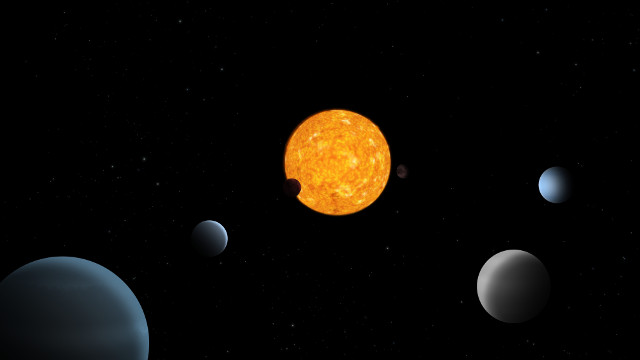
Artist's concept of the planets orbiting HD 108236 (Image NASA/JPL-Caltech)

An article published in “The Astronomical Journal” reports the confirmation of four exoplanets, one super-Earth and three mini-Neptunes, in the system of the star HD 108236. A team led by Tansu Daylan, postdoc Kavli Institute for Astrophysics and Space Research at MIT, analyzed data collected by NASA’s TESS space telescope to identify those exoplanets. Two high school students also participated in this research as part of the Student Research Mentoring Program (SRMP) at the Center for Astrophysics | Harvard & Smithsonian. An article accepted for publication in the journal “Astronomy & Astrophysics” reports the discovery of another super-Earth in the same system by a team of researchers led by Andrea Bonfanti of the Austrian Academy of Sciences that used ESA’s CHEOPS space telescope.

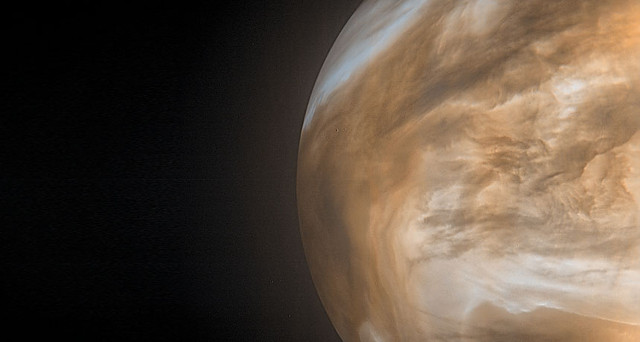
The night side of Venus seen by the Akatsuki space probe (Image courtesy JAXA / ISAS / DARTS / Damia Bouic)

An article accepted for publication in “The Astrophysical Journal” reports research that offers an alternative explanation to the presence of phosphine on Venus. A team of researchers used a robust model of the conditions in Venus’s atmosphere reanalyzing the data that led to the conclusion that there was phosphine. The new conclusion is that the data are consistent with the presence of sulfur dioxide.

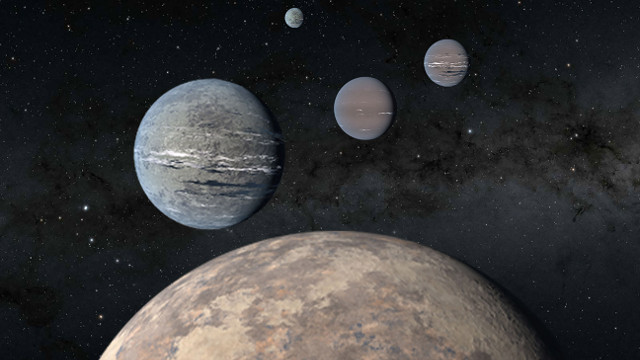
Artist’s impression of the TOI-178 planetary system (Image ESA)

An article published in the journal “Astronomy & Astrophysics” reports a study on the TOI-178 system that confirms the presence of six planets and indicates that the orbits of five of them are in resonance. A team of researchers led by Adrien Leleu of the Université de Genève and the University of Bern, Switzerland, used ESA’s CHEOPS space telescope and other instruments to confirm that there are at least six planets orbiting TOI-178. The result is a unique situation, with very different planets of which five follow a 2:4:6:9:12 resonance pattern.

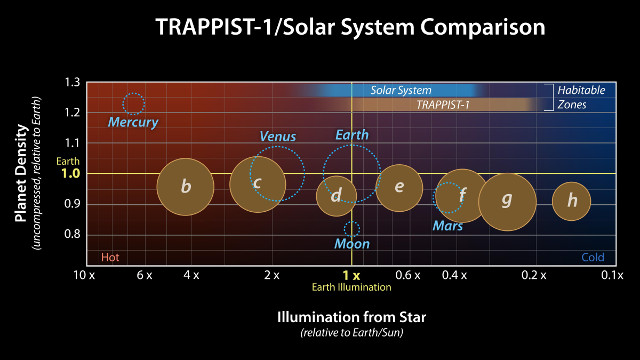
A comparison between the densities and illumination of the TRAPPIST-1 planets and the solar system's rocky planets with respect to Earth

An article published in the “Planetary Science Journal” reports a study on the seven planets of the ultra-cool dwarf star TRAPPIST-1’s system. A team of researchers led by astrophysicist Eric Agol of the University of Washington used data collected by the Spitzer Space Telescope over four years, by the Hubble and Kepler space telescopes, and by ground-based telescopes to obtain precise measurements of the planets’ masses and densities. The new calculations indicate that the seven planets have a very similar density, a new clue in the study of their composition with the possible similarities and differences compared to the rocky planets in the solar system.

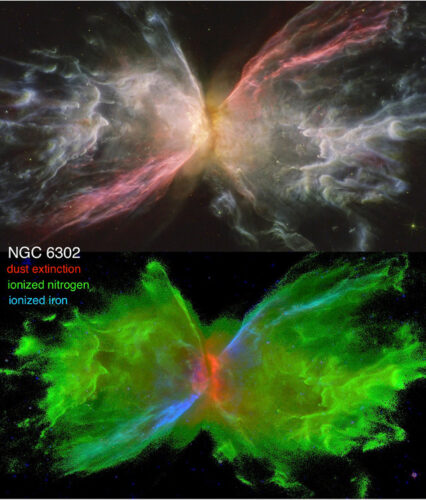
The planetary nebulae NGC 6302, also known as the Butterfly Nebula

At the 237th meeting of the American Astronomical Society, new data were presented regarding the planetary nebulae NGC 6302, also known as the Butterfly Nebula, and NGC 7027, also known as the Jewel Bug Nebula. A team of researchers used observations made with the Hubble Space Telescope at different wavelengths ranging from near-ultraviolet to near-infrared to study their properties. This made it possible to obtain new details that offer new insights into the ongoing processes in which dying stars are ejecting layers of ionized gas in a chaotic way.