Landers / Rovers

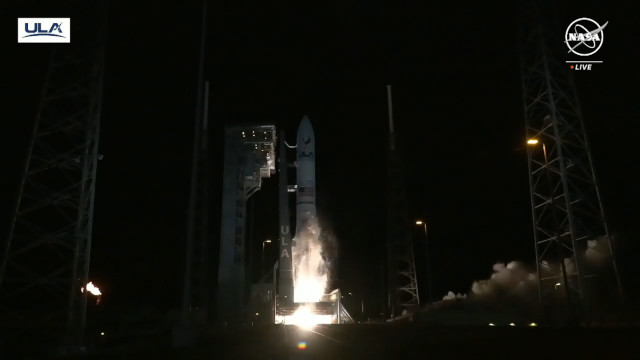
The Vulcan rocket blasting off (Image NASA TV)

A little while ago, ULA’s Vulcan rocket launched on its maiden mission, formally designated as CERT-1. For the occasion, it was carrying Astrobotic Technology’s Peregrine Moon lander, which separated from the rocket stage called Centaur after about 50 minutes. A capsule containing ashes of various famous people was also launched into a heliocentric orbit. The Centaur continued its mission with a few burns and cut-offs of its engine until it goes out of Earth orbit, scheduled after just under 4.5 hours from the launch.

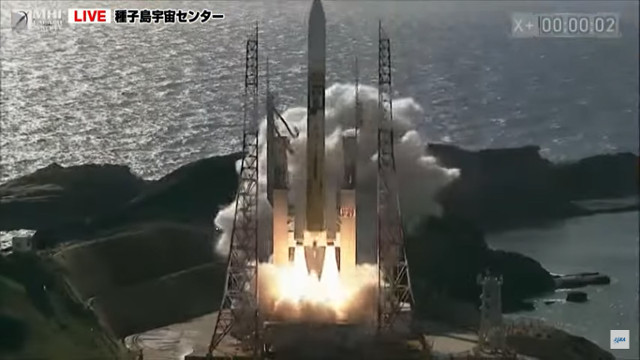
The XRISM space telescope and the SLIM Moon lander blasting off atop an H-IIA rocket (Image courtesy JAXA)

A few hours ago, the Japanese XRISM space telescope and the SLIM Moon lander were launched from the Tanegashima space center atop an H-IIA rocket. After just over 14 minutes, XRISM separated from the rocket’s last stage and after about 48 minutes, SLIM did the same. XRISM will reach low Earth orbit, where it will position at an altitude of approximately 550 kilometers. SLIM started a much longer journey.

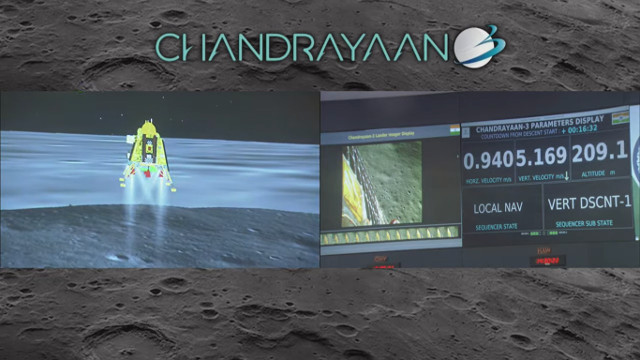
Animation of the Vikram lander and the Pragyan rover during the moon landing (on the left) and the real situation (on the right) (Image courtesy ISRO)

The Vikram lander and the Pragyan rover of the Indian mission Chandrayaan 3, launched on July 14, have successfully landed on the Moon. The idea at the Indian space agency ISRO was to replicate what was done almost exactly four years ago in the Chandrayaan 2 mission, eliminating the problems encountered on that occasion in order to achieve success. The hard lesson was learned and this time, the vehicles successfully completed the insidious maneuver of landing on the Moon. India joins the small club of nations that successfully sent a vehicle to the Moon.

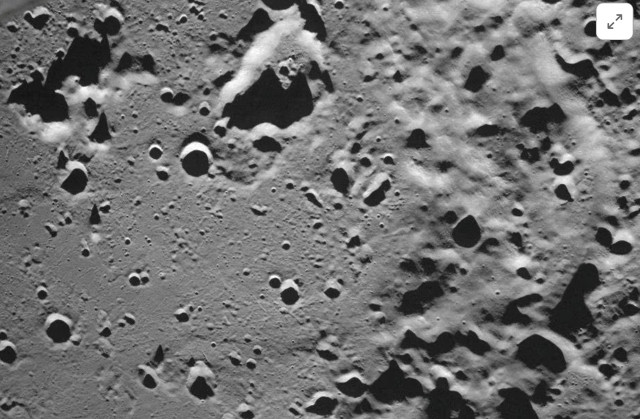
Photo of the Moon surface taken by the Luna 25 lander (Photo courtesy Roscosmos)

The Russian space agency Roscosmos has confirmed that its Luna 25 lander crashed on the Moon following an anomaly in one of the maneuvers that was supposed to lead to its Moon landing on Monday. The problems began on Saturday, when there was the problem and communications were lost. An examination of the telemetry data received up to that point led to the conclusion that the impulse was excessive, leading to a trajectory that caused a crash. Yet another problem in the Russian space program will bring consequences yet to be assessed in the Luna-Glob program which is based on increasingly ambitious missions for the next few years and had already accumulated years of delay.

The Luna 25 lander blasting off atop a Soyuz-2.1b (Image courtesy Roscosmos)

A few hours ago, the Luna 25 lander blasted off atop a Soyuz-2.1b rocket from the Russian Vostochny Cosmodrome. After about an hour, the Fregat-M last stage pushed the vehicle to leave Earth orbit, performing the maneuver called in jargon TLI (Tras Lunar Injection) which will take it towards the Moon, where it will land near the south pole, near the Boguslavsky crater.

The Luna 25 mission is the first of the Luna-Glob program, which began in the 1990s with the ambition to reprise the Soviet Luna program and develop it in a way that wasn’t possible in the 1970s. For this reason, the name is Luna 25, considering it the follow-up mission to the 1976 Luna 24.