Satellites

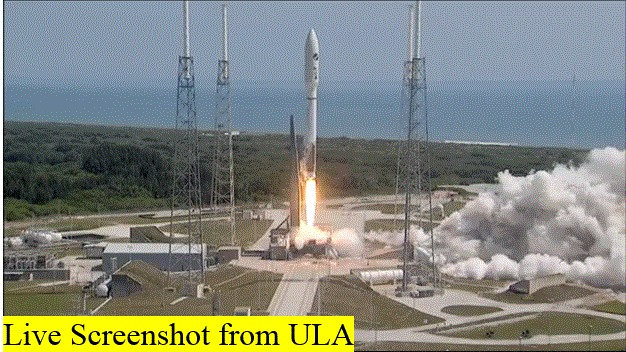
The X-37B shuttle blasting off atop an Atlas V 501 rocket starting its OTV-4 mission (Screenshot from ULA webcast)

The mini-shuttle X-37B blasted off atop an Atlas V 501 rocket from Cape Canaveral. The launch seems to have gone well but ULA (United Launch Alliance), which manages it, broadcat the images providing information on the progress of the operations just for a few minutes. That’s because the mission of this spaceplane is carried out by the US Air Force and is partially covered by military secret.

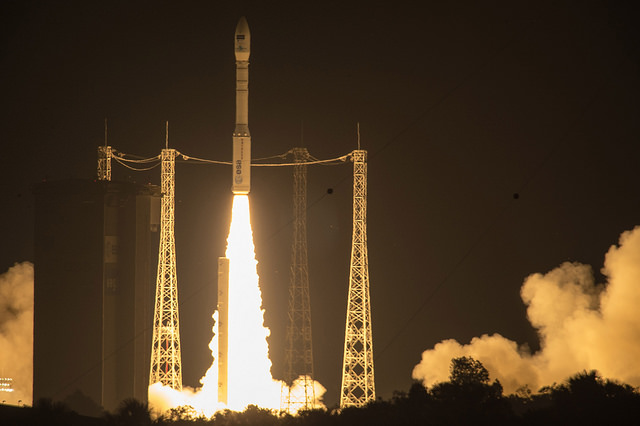
The MexSat-1/Centenario satellite blasting off atop a Proton-M rocket (Image courtesy Tsenki/Roscosmos. All rights reserved)

It was almost noon yesterday in Kazakhstan when the MexSat-1 satellite, also called Centenario to celebrate the centenary of the Mexican Revolution, was launched on a Proton-M rocket from the Baikonur Cosmodrome in Kazakhstan. After about 10 minutes, however, something malfunctioned in the rocket’s third stage, causing the loss of the satellite.

Artistic concept of a satellite of the DMSP constellation in orbit (Image US Air Force)

The events took place on February 3, 2015, but the US Air Force disclosed them only a few days ago. DMSP-F13 (Defense Meteorological Satellite Program Flight 13), the oldest military meteorological satellite constellation still in use, apparently exploded producing a series of fragments following a sudden spike of temperature with subsequent loss of control.

The DSCOVR satellite lifting off atop a Falcon 9 rocket (Photo NASA/Tony Gray and Tim Powers)

The DSCOVR (Deep Space Climate Observatory) satellite was launched a few hours ago on a SpaceX Falcon 9 rocket from the Space Launch Complex 40 (SLC-40) at Cape Canaveral. The spacecraft successfully separated from the rocket’s last stage after about half an hour and inserted in the trajectory that will bring it to its destination. It also deployed its solar panels and sent the first signals, confirming that it’s working properly.

DSCOVR will be placed in an area called L1, about a half million kilometers (about 930,000 miles) from Earth, where the planet and the Sun’s gravity are balanced. There it will begin its mission of observation of the solar wind after the test period, that will last about 40 days.