Satellites

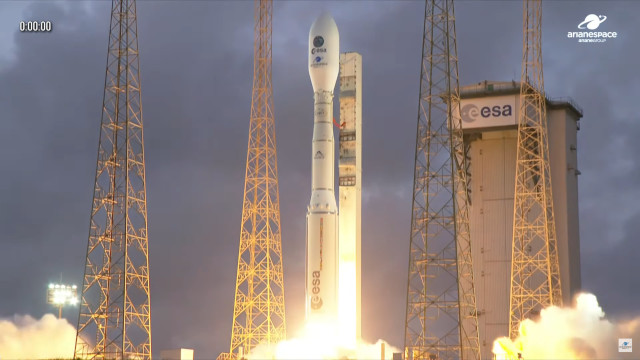
The Biomass satellite blasting off atop a Vega-C rocket (Image courtesy Arianespace)

A little while ago, the Biomass satellite was launched atop a Vega-C rocket from the Kourou base in French Guiana. After about 58 minutes, it successfully separated from the rocket’s last stage and set off on a course that will take it to its Sun-synchronous orbit at an altitude of 666 kilometres, where it will study the biomass of forests around the world. This work will help us better understand the global carbon cycle and forest ecosystems.

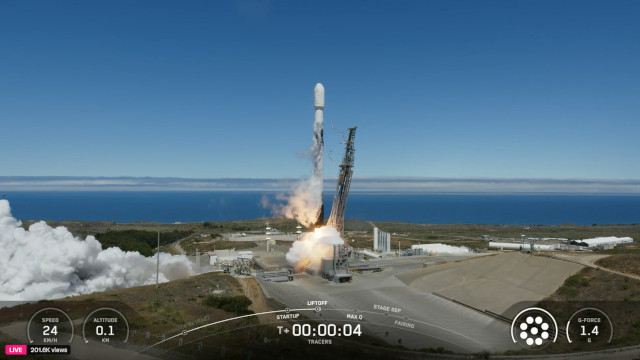
The SPHEREx space telescope and the PUNCH satellites blasting off atop a Falcon 9 rocket (Image courtesy SpaceX)

A few hours ago, the SPHEREx space telescope and the PUNCH satellites, two NASA astronomy missions, blasted off atop a SpaceX Falcon 9 rocket from the Vandenberg base. After about 42 minutes, SPHEREx successfully separated from the rocket’s last stage, and about 10 minutes later, the PUNCH satellites also separated, within about a minute. Both missions will operate from a Sun-synchronous orbit at an altitude of 700 kilometers for SPHEREx and 570 kilometers for PUNCH.

The Nova-C Athena Moon lander and the Lunar Trailblazer satellite blasting off atop a Falcon 9 rocket (Image courtesy Intuitive Machines)

A few hours ago, the Nova-C Athena Moon lander blasted off atop a SpaceX Falcon 9 rocket from Kennedy Space Center on Intuitive Machines’ IM-2 mission. After about 48 minutes, it successfully separated from the rocket’s last stage and set off on a course to the Moon, where it’s scheduled to attempt a landing on March 6. About 3 minutes later, NASA’s small Lunar Trailblazer satellite also separated from the rocket’s second stage, but its course is very different from Athena’s, so it will not reach the Moon until June.

The SpaDeX satellites blasting off atop a PSLV-CA rocket (Photo courtesy ISRO)

It was night in India when the two satellites of the SpaDeX (Space Docking Experiment) mission were launched from the Satish Dhawan Space Center atop a PSLV-CA rocket. The two satellites separated from the rocket’s final stage and entered a circular orbit at an altitude of about 475 kilometers. Another 24 experiments were launched on the same mission, but the SpaDeX satellites are the most important because they will serve to test the docking technologies necessary for the progress of the Indian space program.

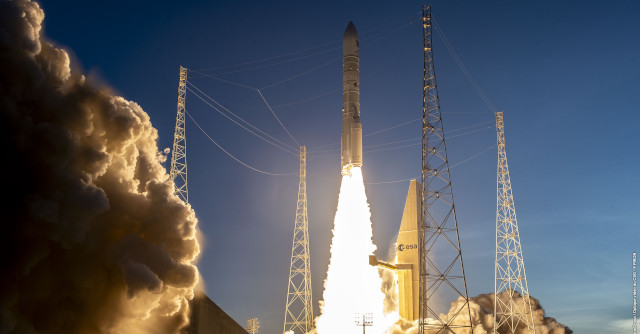
Sentinel-1C satellite blasting off atop a Vecga-C rocket (Photo courtesy ESA-CNES-ARIANESPACE/Optique vidéo du CSG–S. Martin)

A few hours ago, the Sentinel-1C satellite, part of the Copernicus / GMES, was launched from the Kourou spaceport, in French Guiana, atop a Vega-C rocket. After about 1 hour and 44 minutes, the satellite regularly separated from the rocket’s last stage and started sending signals. Its final orbit in low Earth orbit will be at an altitude of about 693 kilometers.