Space Stations

Nauka/MLM blasting off atop a Proton-M rocket (Image NASA TV)

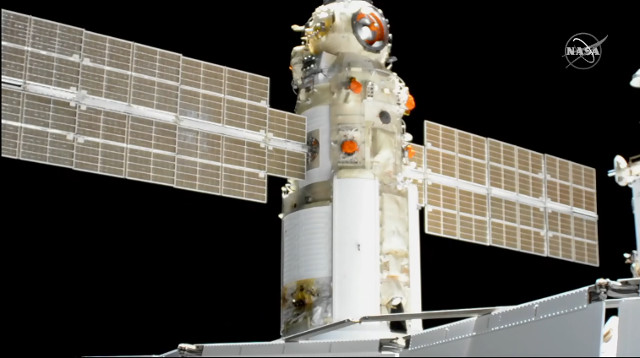
Yesterday, the Russian Nauka module, formally called the Multipurpose Laboratory Module (MLM), was launched atop a Proton-M rocket from the Kazakh cosmodrome of Baikonur. After about nine minutes it successfully separated from the rocket’s last stage and set off on its course. Its journey will take about 8 days to reach the International Space Station on July 29, where it will become part of the Russian section many years behind schedule. The launch included the European Robotic Arm (ERA) developed under the auspices of ESA, a robotic arm that will be used for operations in the area of ​​the Station’s Russian section.

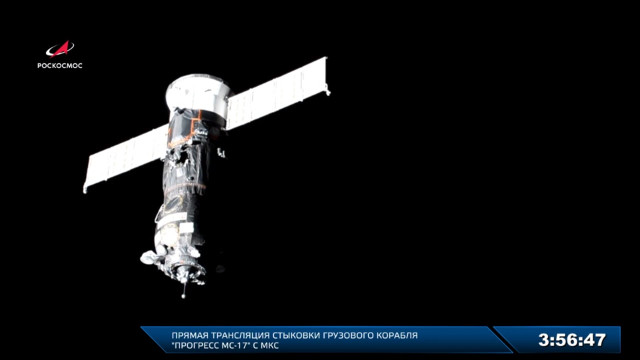
The Progress MS-17 cargo spacecraft approaching the International Space Station (Image courtesy Roscosmos)

A few hours ago, the Progress MS-17 spacecraft docked with the International Space Station in the mission also referred to as Progress 78 or 778. The Russian cargo spacecraft, which blasted off last Tuesday, June 30, carries food, water, scientific experiments, fuel, and various hardware.

The Progress MS-17 cargo spacecraft docked with the International Space Station’s Russian Poisk module. Today, the crew will probably proceed with the hatch opening and the procedures to make the Progress MS-17 an appendage to the Station.

The Shenzhou 12 mission launch (Photo courtesy Xinhua/Li Gang)

A confirmation has arrived that three Chinese taikonauts of the Shenzhou 12 mission have reached the Tianhe core module of the Chinese space station with an automated docking maneuver. They blasted off about 6.5 hours earlier atop a Long March-2F rocket from the Jiuquan Satellite Launch Center. They are the first crew of the Chinese space station. This is the longest-duration mission in the history of the Chinese space program but it’s only the first, as crew rotation is scheduled about every three months.

The Chinese Tianzhou-2 cargo spacecraft blasting off (Photo courtesy Xinhua/Ju Zhenhua)

A few hours ago the Chinese Tianzhou-2 cargo spacecraft docked to the Tianhe core module of the Chinese space station successfully completing an automated maneuver. Tianzhou-2 was launched a few hours earlier atop a Long March-7 Y3 rocket from the Wenchang site. This is the first space cargo spacecraft launched towards the new Chinese space station, carrying propellant and supplies for the taikonauts, as the Chinese call their astronauts, who will start working on the station starting in mid-June, according to plan.