
Space Stations


Mission NG-20 accomplished: the Northrop Grumman Cygnus spacecraft has reached the International Space Station
Northrop Grumman’s Cygnus spacecraft, launched last Tuesday, January 30, has just reached the International Space Station and was captured by the Canadarm2 robotic arm. Astronaut Loral O’Hara, assisted by his colleague Jasmin Moghbeli, will soon begin the slow maneuver to move the Cygnus until it docks with the Station’s Unity module after about two hours.


Mission CRS-29 accomplished: the SpaceX Dragon spacecraft has come back to Earth
A few hours ago, SpaceX’s Dragon spacecraft ended its CRS-29 (Cargo Resupply Service 29) mission for NASA splashing down smoothly off the Florida Coast. The Dragon left the International Space Station a little more than 19 hours earlier. For SpaceX, this was the 9th mission of the 2nd contract with NASA to transport supplies to the Station with the new version of the Dragon cargo spacecraft.
Shortly after the splashdown, SpaceX’s recovery ship went to retrieve the Dragon to transport it to the coast. The cargo brought back to Earth will be delivered to NASA within a few hours. The Dragon spacecraft reached the International Space Station on November 11, 2023.


The Russian Progress MS-25 spacecraft has reached the International Space Station
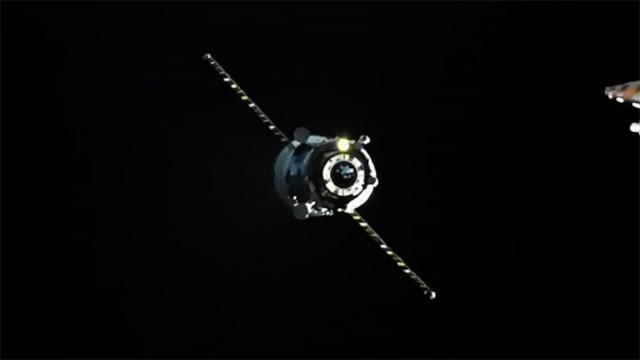
A little while ago, the Progress MS-25 spacecraft docked with the International Space Station in the mission also referred to as Progress 85 or 85P. The Russian cargo spacecraft, which blasted off last Friday, December 1, carries food, water, scientific experiments, fuel, and various hardware. The Progress spacecraft have an automatic docking system but in case of problems, the cosmonauts on board the Station take control of it and that’s what happened today to complete the maneuver.

Mission CRS-29: the SpaceX Dragon spacecraft has reached the International Space Station
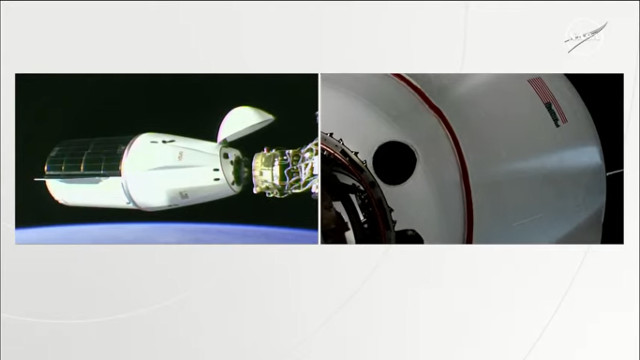
A little while ago, SpaceX’s Dragon 2 spacecraft docked with the International Space Station’s Harmony module completing the first part of its CRS-29 mission. Astronauts Jasmin Moghbeli and Loral O’Hara monitored the operation but the cargo spacecraft, which blasted off when it was Thursday night in the USA, completed the maneuvers automatically without any problem.
The CRS-29 mission will end in about a month with the return to Earth. The second version of the Dragon cargo spacecraft can stay in space much longer than the first version but for now, NASA hasn’t extended its missions.
