Space companies / agencies

Boeing's CST-100 Starliner Calypso spacecraft during recovery (Photo courtesy Boeing. All rights reserved)

Boeing has announced that its engineers and technicians are conducting an in-depth examination of its CST-100 Starliner spacecraft, which landed on December 22 after the premature end of its Boe-OFT (Boeing Orbital Flight Test) mission. The exam includes the recovery of all the data recorded by the on-board systems to obtain final answers on the problem that caused an off-nominal orbit insertion about half an hour after launch. After landing at the White Sands Missile Range, New Mexico, the name Calypso was proposed by astronaut Sunita Williams and quickly approved, therefore it will be the official name used in the next missions, as the spacecraft is reusable.

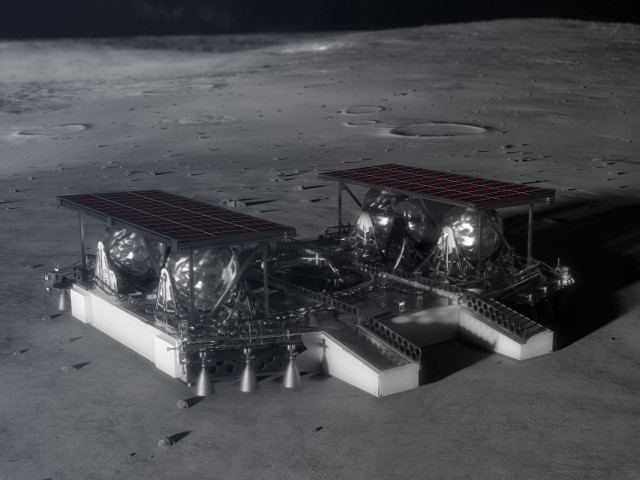
Artist's concept of lander on the Moon's surface (Image NASA)

NASA presented a medium-sized lunar lander concept that could be used during missions in the next few years within the Artemis program. The aim is to bring human beings back to the Moon, but manned missions involve a series of scientific studies with the aim of creating a stable base. Various scientific instruments and rovers will be needed that can make explorations on the lunar surface, payloads that can be brought to the surface by a lander of a type compared to a pallet. A technical publication of the concept offers references for the industries that collaborate with NASA.

Artist's concept of Starship with lander on the Moon (Image courtesy SpaceX)

NASA has announced the selection of five more companies within the program called Commercial Lunar Payload Services (CLPS). They’re added to the ones announced in November 2018 for a total of 14 companies that will be eligible to bid on proposals to provide services to send various types of cargoes to the Moon. They’re support services to the Artemis program which aims to send humans back to the Moon. There’s the well-known SpaceX, another company that already has contracts with NASA such as Sierra Nevada Corporation, an ambitious company that has yet to show what it can do such as Blue Origin and two lesser known companies such as Ceres Robotics and Tyvak Nano-Satellite Systems Inc.

Jeff Bezos during hls announcement (Photo courtesy Blue Origin. All rights reserved)

Yesterday, at the International Astronautical Congress 2019 being held in Washington, D.C., Jeff Bezos, Blue Origin’s founder, announced an alliance of his company with other aerospace giants to work together within NASA’s Artemis program and bring humans back to the Moon by 2024. At the base of the solution he proposed, called Human Landing System, there’s the Blue Moon lunar lander unveiled by Bezos himself in May 2019.

Jeff Bezos with a Blue Moon mockup (Photo courtesy Blue Origin. All rights reserved)

Yesterday in an event presented by himself, the aerospace company Blue Origin’s owner Jeff Bezos revealed the project of a lunar lander capable of transporting up to 6,500 kg of cargo but also human beings to the Moon and to transport cargoes and astronauts from the Moon to the Earth called Blue Moon. The goal is to offer his help in the return of American astronauts to the Moon and subsequently to create there a permanent human presence.