Spacecraft

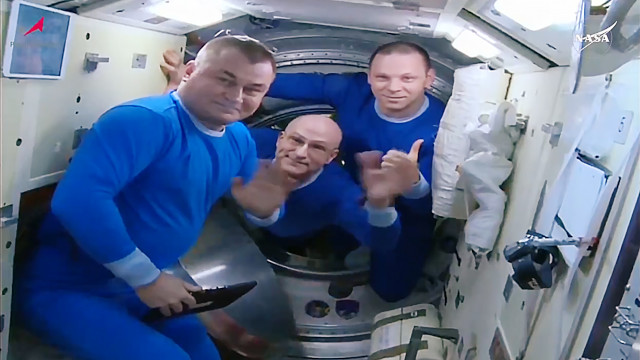
The Dragon cargo spacecraft as seen by astronaut Don Pettit while departing the International Space Station to end its CRS-31 mission

A few hours ago, SpaceX’s Dragon spacecraft ended its CRS-31 (Cargo Resupply Service 31) mission for NASA splashing down smoothly off the Florida Coast. The Dragon left the International Space Station about 24 hours earlier. For SpaceX, this was the 11th mission of the 2nd contract with NASA to transport supplies to the Station with the new version of the Dragon cargo spacecraft.

Shortly after the splashdown, SpaceX’s “MV Megan” recovery ship went to retrieve the Dragon to transport it to the coast. The cargo brought back to Earth will be delivered to NASA within a few hours. The Dragon spacecraft reached the International Space Station on November 5, 2024.

Super Heavy Booster 13 and Starship 31 blasting off (Image courtesy SpaceX)

It was the afternoon in the USA when SpaceX conducted a new flight test of its Super Heavy rocket and Starship prototypes, launched from its base in Boca Chica, Texas. This is the sixth test involving the entire system of Elon Musk’s company which is supposed to revolutionize space travel with an unprecedented transport capacity and being totally reusable. They are advanced prototypes with the Super Heavy identified as Booster 13 and the Starship identified as Starship 31 or Ship31 or simply S31.

The taikonauts Ye Guangfu, Li Cong, and Li Guangsu after the end of the Shenzhou 18 mission (Photo courtesy Xinhua/Li Xin)

It was night in China when the three Chinese taikonauts of the Shenzhou 18 mission returned to Earth after spending a little more than six months on the Chinese space station Tiangong, where they arrived on April 25. The three taikonauts Ye Guangfu, Li Cong, and Li Guangsu had left the station about nine hours earlier to land at a site called Dongfeng in China’s Inner Mongolia Autonomous Region. It’s a procedure that significantly reduces the time to return to Earth and now has become routine.

The Shenzhou 19 mission launches atop a Long March-2F rocket (Photo courtesy Wang Jiangbo/Xinhua)

A confirmation has arrived that three Chinese taikonauts from the Shenzhou 19 mission reached the Chinese space station Tiangong with an automated docking maneuver. They blasted off about 6.5 hours earlier atop a Long March-2F rocket from the Jiuquan Satellite Launch Center. They form the 8th crew of the Chinese space station and will remain there for about six months, the standard duration for a mission.