
Spacecraft

The Crew Dragon Endurance spacecraft concludes its Crew-5 mission with its splashdown (Image NASA TV)

A few hours ago, SpaceX’s Crew Dragon Endurance spacecraft concluded its Crew-5, or SpaceX Crew-5, mission for NASA by landing without problems. On board were astronauts Nicole Mann, Josh Cassada, and Koichi Wakata and cosmonaut Anna Kikina, who had reached the International Space Station on October 6, 2022, and were part of Expedition 68. The four of them finished the fifth regular crewed mission of SpaceX in the Atlantic Ocean, off the coast of Tampa, Florida. The Crew Dragon departed the Station about nineteen hours earlier.

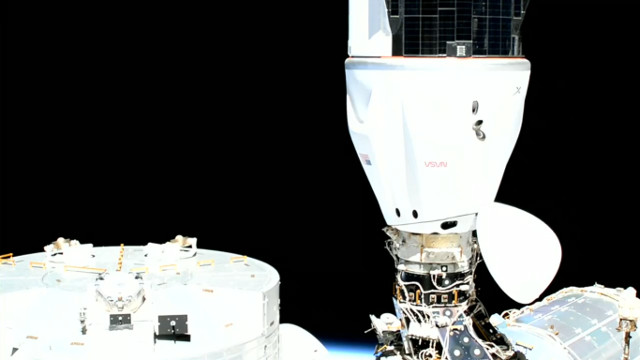
SpaceX's Crew Dragon Endeavour spacecraft docked with the International Space Station (Image NASA TV)

A few hours ago, SpaceX’s Crew Dragon Endeavour spacecraft docked with the Harmony module of the International Space Station completing the first part of its Crew-6 or SpaceX Crew-6 mission that began with its launch a little more than 24 hours earlier. After checking that the pressure was properly balanced, the hatch was opened to allow Andrey Fedyaev, Stephen Bowen, Warren Hoburg, and Sultan Alneyadi to enter the Station and start their mission, which will last about six months.

SpaceX's Crew Dragon Endeavour spacecraft blastin off atop a Falcon 9 rocket (Photo NASA/Frank Michaux)

A few hours ago, SpaceX’s Crew Dragon Endeavour spacecraft blasted off atop a Falcon 9 rocket from the Kennedy Space Center in its Crew-6 or SpaceX Crew-6 mission. After almost exactly twelve minutes, it successfully separated from the rocket’s last stage and went en route to carry out its mission. This is the 6th crewed mission of the Crew Dragon spacecraft within the normal rotation of the International Space Station crew. This is also the fourth mission for the Endeavour.

The Soyuz MS-23 spacecraft approaching the International Space Station (Image NASA TV)

A few hours ago the Soyuz MS-23 spacecraft docked with the International Space Station. It blasted off on Friday, February 24, with the aim to replace the Soyuz MS-22, which use in safety conditions was made impossible by a failure in its cooling system. Now the mission of Dmitri Petelin, Frank Rubio, and Sergey Prokopyev could be extended for a total duration of about a year using the Soyuz MS-23 to enable them to come back to Earth.

The Soyuz MS-23 spacecraft blasting off atop a Soyuz-2.1a rocket (Image NASA TV)

A few hours ago, the Soyuz MS-23 spacecraft blasted off atop a Soyuz-2.1a rocket from the Baikonur Cosmodrome, Kazakhstan. After about nine minutes it successfully separated from the rocket’s last stage and was placed on its route, which requires about two days of journey. It replaces the damaged Soyuz MS-22 as a vehicle for the return of its three crew members: Dmitri Petelin, Frank Rubio, and Sergey Prokopyev. This is the solution chosen by the Russian Roscosmos space agency after having established the impossibility of using the Soyuz MS-22 for the return journey with a crew on board in safety conditions.