

Spacecraft


A success for the launch of the Russian Progress MS-16 cargo spaceship to the International Space Station
A few hours ago, the Progress MS-16 spacecraft blasted off atop a Soyuz-2.1a rocket from the Baikonur Cosmodrome in Kazakhstan. After about nine minutes it successfully separated from the rocket’s last stage and was placed on its route. The cargo spacecraft began its resupply mission to the International Space Station also called Progress 77 or 77P. In this mission, the route used is the one that requires about two days.

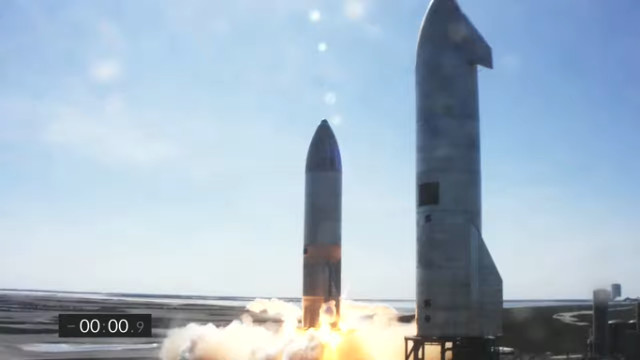
The test for SpaceX’s Starship SN9 prototype gives more good results but it ends with another bang
It was afternoon in the USA when SpaceX conducted in Boca Chica, Texas, the flight test of the Starship prototype identified as SN9, the second after the one conducted on December 9, 2020. SN9 was supposed to solve the problems of the previous prototype and it too carried out regularly its flight up to an altitude of about 10 kilometers and then attempted a controlled landing at the end of a series of maneuvers. After 6 minutes and 26 seconds of flight, like its predecessor, SN9 landed too fast and was destroyed as a result. SpaceX confirmed that its good results with regards to Starship’s maneuverability, but landing is still an issue. With the many first-stage landings of the Falcon 9 rocket, it’s making that kind of maneuver look easy, but it requires perfect systems tuning.


Mission CRS-21 accomplished: the SpaceX Dragon spacecraft has come back to Earth
A few hours ago the SpaceX Dragon spacecraft ended its CRS-21 (Cargo Resupply Service 21) mission for NASA splashing down smoothly in Gulf of Mexico, off the coast of Florida. The Dragon left the International Space Station last Tuesday. For SpaceX, this was the first mission of the second contract with NASA to transport resupplies to the Station with the new version of the Dragon cargo spacecraft, the first to splash down near the East coast of the USA instead of the Pacific Ocean.


The Moon samples collected by the Chinese Chang’e-5 mission arrived on Earth
It was night in China when the capsule carrying the Moon samples taken during the Chang’e-5 mission landed in the Siziwang Banner, meaning an autonomous county of Inner Mongolia. The lander with the return module landed on the Moon on December 1, spent about two days collecting samples, and the return module took off to transport the samples to orbit and start the voyage back to Earth. Recovery personnel found the capsule, which will be transported to a laboratory in Beijing, where operations will begin to open it without contaminating its contents.
