Astronauts

Blogs about astronaut activities

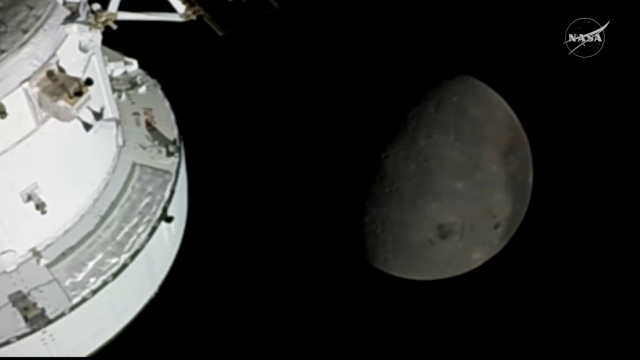
The Orion Integrity spacecraft and the Moon in the background (Image NASA)

NASA’s Orion Integrity spacecraft has completed a record-breaking journey around the Moon as part of the Artemis II mission. It didn’t enter lunar orbit, but “merely” circled it to boldly go where no one has gone before, approximately 406,771 kilometers (252,756 miles) from Earth, breaking the record for the maximum distance for a human spaceflight that was held by Apollo 13. That 1970 mission reminds us of the risks astronauts face in space, and after completing that feat, astronauts Christina Koch, Victor Glover, Reid Wiseman, and Jeremy Hansen set course for their return to Earth, scheduled for Friday, April 10.

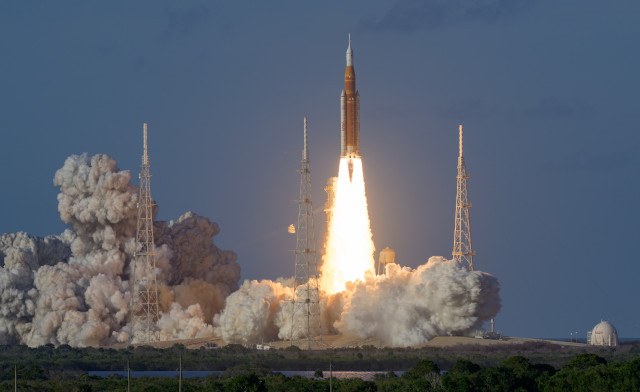
The Space Launch System lifts off with the Orion Integrity spacecraft (NASA Photo/Bill Ingalls)

It was afternoon in the USA when NASA’s Orion spacecraft separated from the last stage, called the ICPS (Interim Cryogenic Propulsion Stage), of the Space Launch System (SLS), which blasted off almost two hours earlier from the Kennedy Space Center. The Orion entered the trajectory that will take it around the Moon to carry out its mission, which will last about 10 days. This is the second launch for the SLS and for the Orion in its full configuration. The Artemis II mission is important because it’s the first of this program to have a crew aboard.

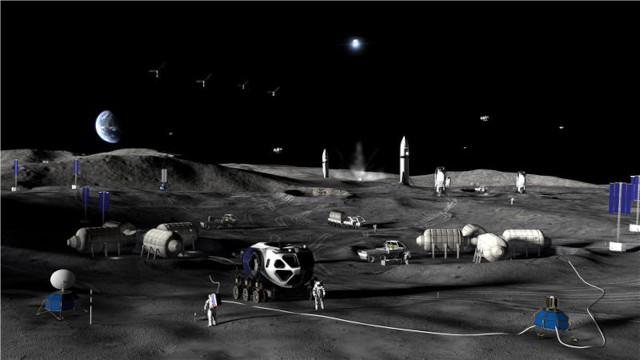
Artist's concept of the Moon base (Image NASA)

Yesterday, NASA held its Ignition event, featuring a series of announcements regarding its space program. Announcements were expected from new Administrator Jared Isaacman and other agency managers in connection with the Artemis program, to clarify the agency’s intentions regarding the return of astronauts to the Moon. From this perspective, the intention that was announced is to accelerate the pace of missions, also in order to build a permanent base on the Moon. In this new vision, the Lunar Gateway project might be abandoned, although officially, it remains relevant in the long term.

The program for missions to Mars was also part of the event. In this case, the Space Reactor-1 Freedom (SR-1 Freedom) mission was introduced, to be conducted using a spacecraft that will use nuclear electric propulsion, scheduled for launch in December 2028. A fleet of Skyfall helicopters is programmed to be on board, intended to continue exploration of the red planet.

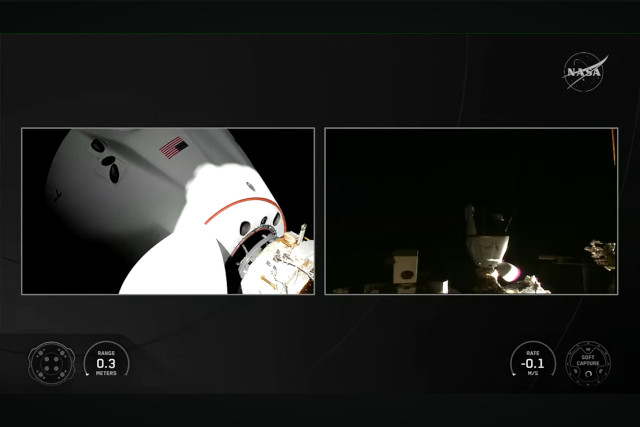
Views of the Crew Dragon Freedom spacecraft docking with the International Space Station in its Crew-12 mission (Image NASA+)

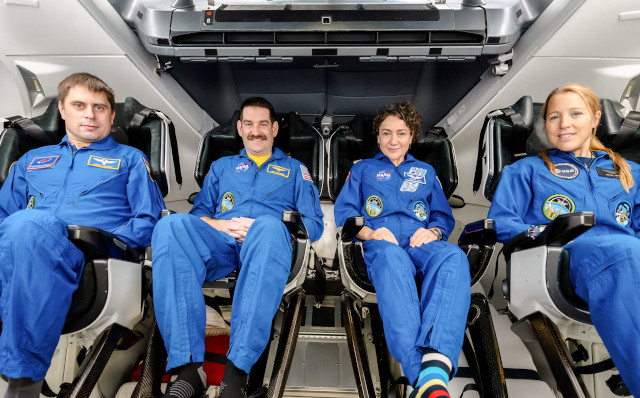
A few hours ago, SpaceX’s Crew Dragon Freedom spacecraft docked with the Harmony module of the International Space Station, completing the first part of its Crew-12 or SpaceX Crew-12 mission that began with its launch about 34 hours earlier. After checking that the pressure gets properly balanced, the hatch will be opened to allow Andrey Fedyaev, Jack Hathaway, Jessica Meir, and Sophie Adenot to enter the Station and start their mission.

The Crew-12 mission crew: Andrey Fedyaev, Jack Hathaway, Jessica Meir, and Sophie Adenot.

A little while ago, SpaceX’s Crew Dragon Freedom spacecraft blasted off atop a Falcon 9 rocket from the Kennedy Space Center in its Crew-12 or SpaceX Crew-12 mission. After almost exactly ten minutes, it successfully separated from the rocket’s last stage and went en route to carry out its mission. This is the 12th crewed mission of the Crew Dragon spacecraft within the normal rotation of the International Space Station crew.