Cargo spaceship

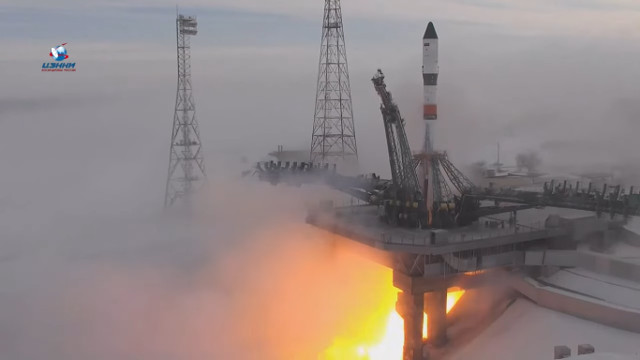
The Progress MS-19 cargo spacecraft blasting off atop a Soyuz-2.1a rocket (Image courtesy Roscosmos)

A few hours ago, the Progress MS-19 spacecraft blasted off atop a Soyuz-2.1a rocket from the Baikonur Cosmodrome in Kazakhstan. After about nine minutes it successfully separated from the rocket’s last stage and was placed on its route. The cargo spacecraft began its resupply mission to the International Space Station also called Progress 80 or 80P. In this mission, the route used is the one that requires about two days.

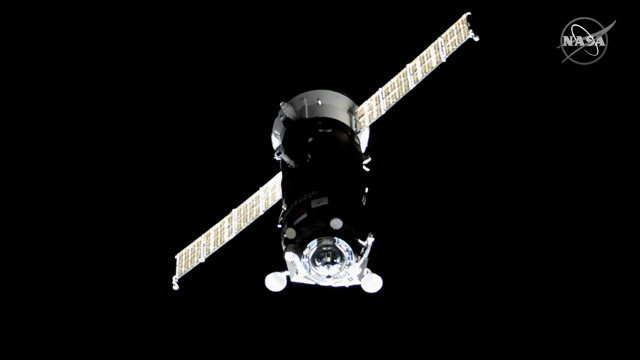
The Dragon cargo spacecraft departing the International Space Station to end its CRS-24 mission (Image NASA)

Yesterday, in the American afternoon, SpaceX’s Dragon spacecraft ended its CRS-24 (Cargo Resupply Service 24) mission for NASA splashing down smoothly in the Gulf of Mexico, near Panama City. The Dragon left the International Space Station last Sunday. For SpaceX, this was the 4th mission of the 2nd contract with NASA to transport supplies to the Station with the new version of the Dragon cargo spacecraft, which splashes down near the East coast of the USA instead of the Pacific Ocean.

Shortly after the splashdown, SpaceX’s “Go Searcher” recovery ship went to retrieve the Dragon to transport it to the coast. The cargo brought back to Earth will be delivered to NASA within a few hours. The Dragon spacecraft reached the International Space Station on December 22, 2021.

The Prichal module docked with the International Space Station (Image NASA TV)

Yesterday, the Russian Prichal module, also known as Uzlovoy Module (UM), docked with the International Space Station’s Nauka/MLM module becoming part of the Russian section. Prichal was launched on November 24 and flown to the Station by a modified Progress cargo spacecraft. Once the task to make it fully operational is completed, it will provide five more docking hatches.

The Prichal module blasting off atop a Soyuz 2.1b rocket (Photo courtesy RSC Energia)

Yesterday, the Russian Prichal module, also known as Uzlovoy Module (UL), was launched atop a Soyuz 2.1b rocket from the Baikonur Cosmodrome, Kazakhstan. After a little more than nine minutes, it successfully separated from the rocket’s last stage and set off on its course. Its journey will take just over two days to reach the International Space Station, on November 26, where it will become part of the Russian section many years behind schedule. Prichal will be driven to its destination by a modified Progress cargo spacecraft.