Cargo spaceship

The Dragon 2 cargo spacecraft blasting off atop a Falcon 9 in its CRS-32 mission (Image NASA+)

A little while ago, the SpaceX Dragon 2 spacecraft blasted off atop a Falcon 9 rocket from Cape Canaveral in its CRS-32 (Cargo Resupply Service 32) mission, also referred to as SPX-32. After almost 10 minutes, it separated successfully from the rocket’s last stage and went en route. This is the 32nd mission for the Dragon/Dragon 2 spacecraft to resupply the International Space Station with various cargoes and then return to Earth, again with various cargoes.

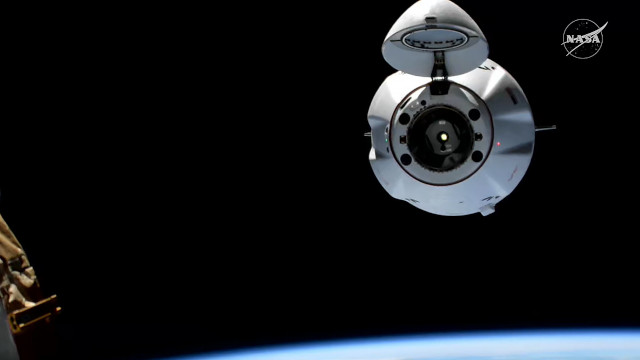
The Dragon cargo spacecraft as seen by astronaut Don Pettit while departing the International Space Station to end its CRS-31 mission

A few hours ago, SpaceX’s Dragon spacecraft ended its CRS-31 (Cargo Resupply Service 31) mission for NASA splashing down smoothly off the Florida Coast. The Dragon left the International Space Station about 24 hours earlier. For SpaceX, this was the 11th mission of the 2nd contract with NASA to transport supplies to the Station with the new version of the Dragon cargo spacecraft.

Shortly after the splashdown, SpaceX’s “MV Megan” recovery ship went to retrieve the Dragon to transport it to the coast. The cargo brought back to Earth will be delivered to NASA within a few hours. The Dragon spacecraft reached the International Space Station on November 5, 2024.

The Cygnus cargo spacecraft captured by the Canadarm2 robotic arm on NG-21 mission (Image NASA TV)

Northrop Grumman’s Cygnus spacecraft, launched last Sunday, August 4, has just reached the International Space Station and was captured by the Canadarm2 robotic arm. Astronaut Matthew Dominick, assisted by his colleague Jeanette Epps, will soon begin the slow maneuver to move the Cygnus until it docks with the Station’s Unity module after about two hours.

The Cygnus cargo spacecraft arrived on schedule despite some issues with a thruster burn that was scheduled to occur about 45 minutes after separation from SpaceX’s Falcon 9 rocket’s last stage. Initial reports indicated that the onboard computer had canceled the burn due to low pressure within the engine systems. Northrop Grumman engineers were able to compensate for the issue with a new burn schedule after reviewing pressure data and determining that it was still acceptable for the thrusters to work.