Launches

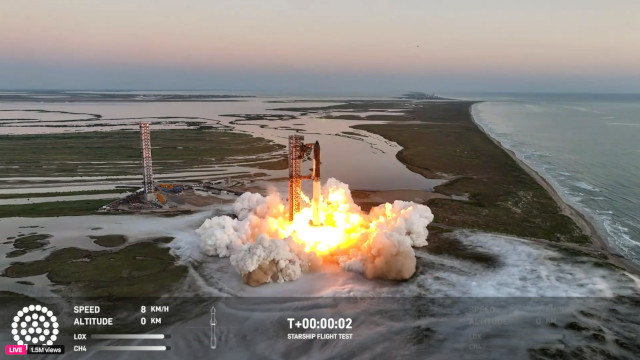
Super Heavy 12 and Starship 30 blasting off (Image courtesy SpaceX)

SpaceX conducted a new flight test of its Super Heavy rocket and Starship prototypes, launched from its base in Boca Chica, Texas. This is the fifth test involving the entire system of Elon Musk’s company which is supposed to revolutionize space travel with an unprecedented transport capacity and being totally reusable. They are advanced prototypes with the Super Heavy identified as Booster 12 and the Starship identified as Starship 30 or Ship30 or simply S30.

Each test leads to new changes to the vehicles’ systems, and this was also true after the fourth test conducted on June 6, 2024. The scheduled breakthrough was in the test of the system called Mechazilla, the structure attached to the launch pad that also has the purpose of capturing the Super Heavy when it returns after launching the Starship.

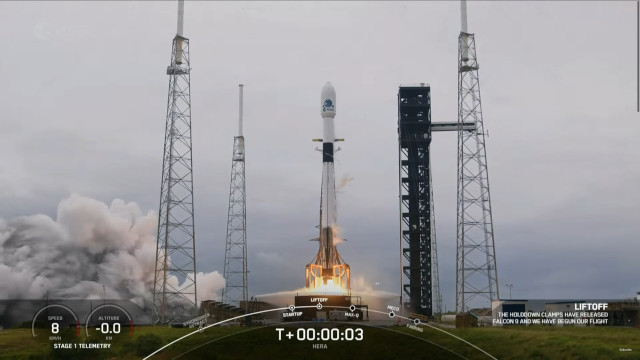
The Hera space probe blasting off atop a Falcon 9 rocket (Image courtesy SpaceX)

Yesterday, ESA’s Hera space probe blasted off atop a SpaceX Falcon 9 rocket from the Cape Canaveral together with the two nanosatellites Juventas and Milani. After about 76 minutes, it successfully separated from the rocket’s last stage and set on its course which in almost exactly two years will take it to the asteroid Didymos and its moon Dimorphos to examine the consequences of the impact of NASA’s DART spacecraft.

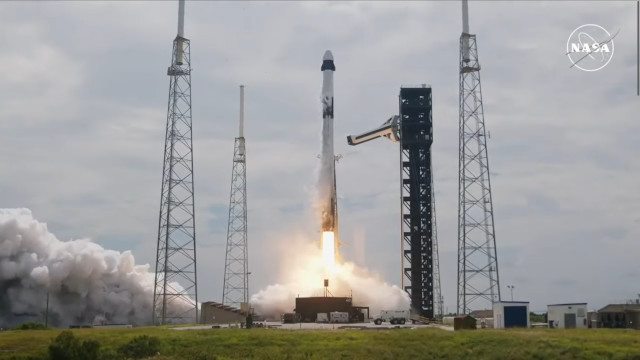
The Crew Dragon Freedom spacecraft blasting off atop a Falcon 9 rocket in its Crew-9 mission (Image NASA TV)

A little while ago, SpaceX’s Crew Dragon Freedom spacecraft blasted off atop a Falcon 9 rocket from the Kennedy Space Center in its Crew-9 or SpaceX Crew-9 mission. After almost exactly twelve minutes, it successfully separated from the rocket’s last stage and went en route to carry out its mission. This is the 9th crewed mission of the Crew Dragon spacecraft within the normal rotation of the International Space Station crew.

The Crew Dragon Resilience spacecraft blasting off atop a Falcon 9 rocket (Image courtesy SpaceX)

A little while ago, the SpaceX Crew Dragon Resilience spacecraft launched atop a Falcon 9 rocket from the Kennedy Space Center on the Polaris Dawn mission. After just over twelve minutes, it successfully separated from the rocket’s last stage. It will spend about five days in orbit on a completely private crewed space mission. For the first time, a spacewalk is planned during a private space mission.

The Sentinel-2C satellite blasting off atop a Vega rocket (Image courtesy ESA-CNES-ARIANESPACE/Optique vidéo du CSG–S. Martin)

A few hours ago, the Sentinel-2C satellite of the Copernicus / GMES program blasted off from the Kourou base, French Guiana, atop a Vega rocket. After about 57 minutes, the satellite regularly separated from the rocket’s last stage and started sending signals. A few hours later it started deploying its solar panels. After a period of testing, it will replace the Sentinel-2A satellite, launched on June 23, 2015. This is the last launch of the original version of the Vega rocket.