Launches

The Progress MS-14 cargo spacecraft blasting off atop a Soyuz 2.1a rocket (Image NASA TV)

A few hours ago the Progress MS-14 spacecraft blasted off atop a Soyuz 2.1a rocket from the Baikonur Cosmodrome in Kazakhstan. After about nine minutes it successfully separated from the rocket’s last stage and was placed on its ultra-fast track in its resupply mission to the International Space Station also called Progress 75 or 75P. After almost 3.5 hours it reached the International Space Station docking with its Zvezda module.

The Soyuz MS-16 spacecraft docking with the International Space Station (Image NASA TV)

A little while ago the Soyuz MS-16 spacecraft was launched from the Baikonur Cosmodrome in Kazakhstan and after a little more than six hours reached the International Space Station with three astronauts on board. In the period preceding a launch, it’s normal for astronauts and cosmonauts to remain in quarantine. In this case it was also extended to the personnel who managed the launch, with limits to the people who could have been in Baikonur.

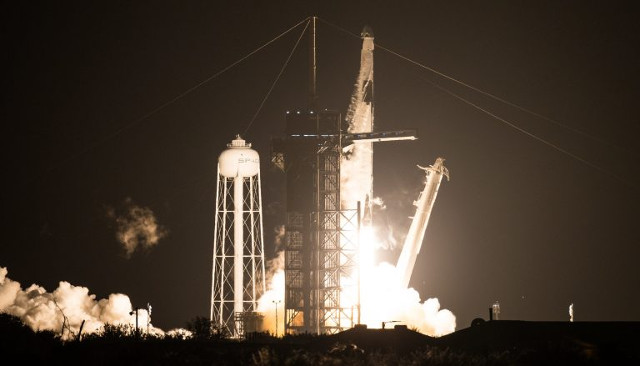
The Dragon cargo spacecraft blasting off for its CRS-20 mission atop a Falcon 9 rocket (Photo NASA)

A few hours ago the SpaceX Dragon spacecraft blasted off atop a Falcon 9 rocket from Cape Canaveral in its CRS-20 (Cargo Resupply Service 20) mission, also referred to as SPX-20. After just over ten minutes it separated successfully from the rocket’s last stage and went en route. This is the 20th mission for the Dragon spacecraft to resupply the International Space Station with various cargoes and then return to Earth, again with various cargoes. It’s the last mission for this Dragon version, which will be replaced by Dragon 2 from the next mission.

The Cygnus cargo spacecraft blasting off atop an Antares rocket to start its NG-13 mission (Image NASA TV)

A little while ago Northrop Grumman’s Cygnus spacecraft blasted off atop an Antares rocket from the Mid-Atlantic Regional Spaceport (MARS), part of NASA’s Wallops Flight Facility (WFF) on Wallops Island. After about nine minutes it successfully separated from the rocket’s last stage went en route to its destination. This is its 13th official mission, called NG-13 or CRS NG-13, to transport supplies to the International Space Station for NASA.

The Solar Orbiter space probe blasting off atop an Atlas V rocket (Photo ESA - S. Corvaja)

A few hours ago the Solar Orbiter space probe blasted off atop an Atlas V rocket from Cape Canaveral. After about 53 minutes, it successfully separated from the rocket’s last stage and began the long journey that will take it up to about 42 million kilometers from the Sun. A little later it deployed its solar panels and started communicating with the mission control center.