Launches

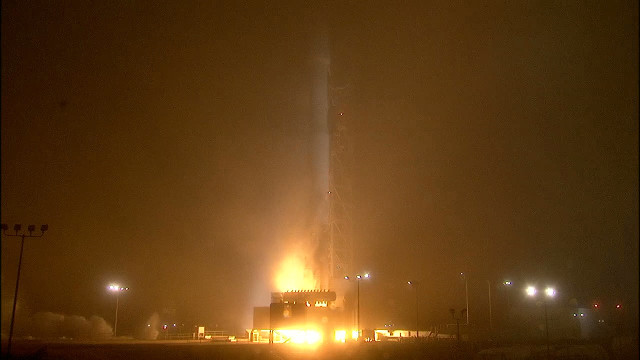
The InSight lander and the MarCO nanosatellites blasting off atop an Atlas V 401 rocket (Image NASA TV)

A few hours ago NASA’s InSight lander was launched together with the two Mars Cube One nanosatellites from the Vandenberg base on an Atlas V 401 rocket. After about 1.5 hours they separated from the rocket’s last stage, called Centaur, and went en route to Mars.

The InSight (Interior Exploration using Seismic Investigations, Geodesy and Heat Transport) mission aims to investigate the geology of the planet Mars. A lander equipped with a seismometer, a thermal sensor and other instruments that will analyze the red planet’s internal structure. This will allow to obtain new data on its formation, also contributing to the existing models on the formation of rocky planets such as the Earth.

The Sentinel-3B satellite blasting off atop a Rockot rocket (Photo ESA - S. Corvaja)

A few hours ago the Sentinel-3B satellite, part of the GMES / Copernicus program, was launched from the Russian Plesetsk Cosmodrome on a Rockot launch vehicle. After about an hour and a half it separated from the rocket’s last stage, called Breeze KM, it started communicating with the control center and to deploy its solar panels. Its final orbit is Sun-synchronous, which means it will pass over a certain area of ​​the Earth at the same local time, with an altitude of about 815 kilometers (about 506 miles).

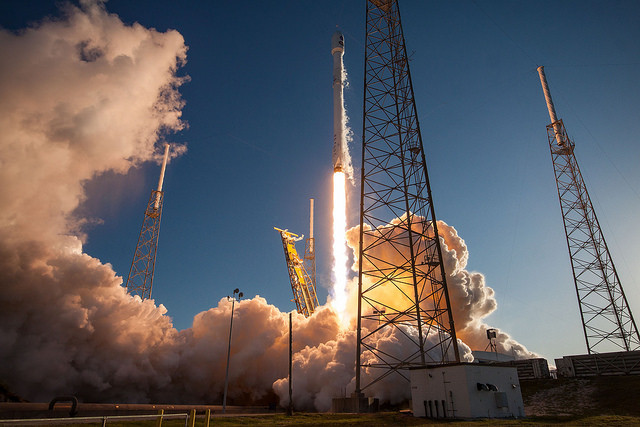
NASA's TESS space telescope blasting off atop a Falcon 9 rocket (Foto SpaceX)

A few hours ago NASA’s TESS space telescope blasted off atop a Falcon 9 rocket from Cape Canaveral. After almost 50 minutes it separated successfully from the rocket’s last stage and reached a transfer orbit where it will start a number of maneuvers that in about two months will take it to the very elliptical final orbit where it will begin its scientific mission.

A Dragon cargo spacecraft starting its CRS-14 mission blasting off atop a Falcon 9 rocket (Photo NASA)

A few hours ago the SpaceX Dragon spacecraft blasted off atop a Falcon 9 rocket from Cape Canaveral in its CRS-14 (Cargo Resupply Service 14) mission, also referred to as SPX-14. After just over ten minutes it separated successfully from the rocket’s last stage and went en route. This is the 14th mission for the Dragon spacecraft to resupply the International Space Station with various cargoes and then return to Earth, again with various cargoes.