Launches

The Progress MS-4 spacecraft blasting off atop a Soyuz U rocket (Image NASA TV)

A little while ago the Progress MS-4 spacecraft blasted off atop a Soyuz U rocket from the Baikonur Cosmodrome in Kazakhstan. After about nine minutes it separated successfully from the rocket’s last stage and was placed on its route. The cargo spacecraft began its resupply mission to the International Space Station also called Progress 65.

When the spacecraft was about to separate from the rocket’s last stage some problems with the reception of telemetry data started. It’s unclear whether the solar panels have been deployed and especially if it’s properly en route. The spacecraft was launched in the 2-day path but its status hasn’t been determined.

The Soyuz MS-02 spacecraft at lift off atop a Soyuz rocket (Image NASA TV)

A little while ago ago the Soyuz MS-02 spacecraft blasted off from the Baikonur Cosmodrome in Kazakhstan carrying Shane Kimbrough, Sergey Ryzhikov and Andrey Borisenko to transport them to the International Space Station. The new version of the Soyuz spacecraft was launched once again in the route that will take two days instead of the six-hour fast path to keep on testing the new on-board systems.

The Cygnus space cargo ship blasting off atop an Antares rocket (Photo NASA/Bill Ingalls)

It was late afternoon in California when Orbital ATK’s Cygnus spacecraft blasted off atop an Antares rocket from the Mid-Atlantic Regional Spaceport (MARS), part of NASA’s Wallops Flight Facility (WFF) on Wallops Island. After about nine minutes it successfully separated from the rocket’s last stage went en route to its destination. This is its sixth official mission, called Orbital-5 or simply Orb-5 but also CRS OA-5, to transport supplies to the International Space Station for NASA.

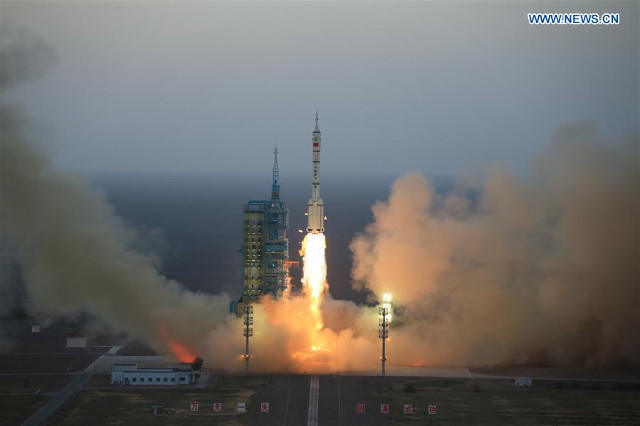
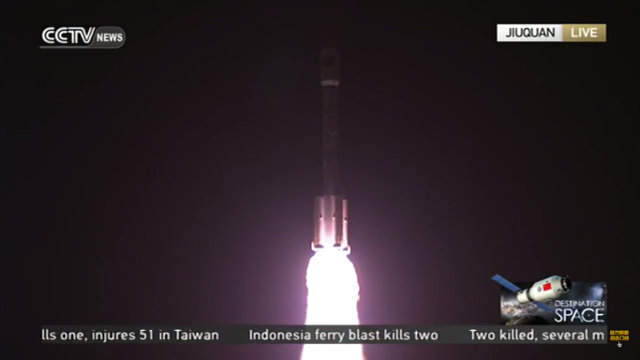
Tiangong-2 after blasting off atop a Long March 2F T2 rocket (Image courtesy CCTV)

A little while ago the Chinese space laboratory Tiangong-2 (Heavenly Palace 2) was launched from the Jiuquan base atop a Long March 2F T2 rocket. After about 10 minutes it successfully separated from the rocket’s last stage, deployed its solar panels and was place in a temporary orbit. Over the next few days, its thrusters will be used to adjust the orbit to an altitude of about 393 kilometers (238 miles).