NASA

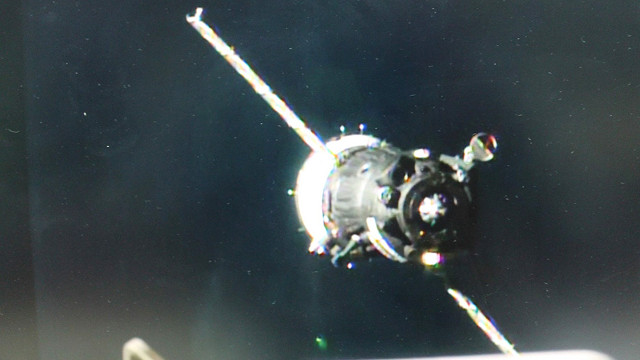
The Soyuz MS-02 spacecraft at lift off atop a Soyuz rocket (Image NASA TV)

A little while ago ago the Soyuz MS-02 spacecraft blasted off from the Baikonur Cosmodrome in Kazakhstan carrying Shane Kimbrough, Sergey Ryzhikov and Andrey Borisenko to transport them to the International Space Station. The new version of the Soyuz spacecraft was launched once again in the route that will take two days instead of the six-hour fast path to keep on testing the new on-board systems.

The Cygnus space cargo ship blasting off atop an Antares rocket (Photo NASA/Bill Ingalls)

It was late afternoon in California when Orbital ATK’s Cygnus spacecraft blasted off atop an Antares rocket from the Mid-Atlantic Regional Spaceport (MARS), part of NASA’s Wallops Flight Facility (WFF) on Wallops Island. After about nine minutes it successfully separated from the rocket’s last stage went en route to its destination. This is its sixth official mission, called Orbital-5 or simply Orb-5 but also CRS OA-5, to transport supplies to the International Space Station for NASA.

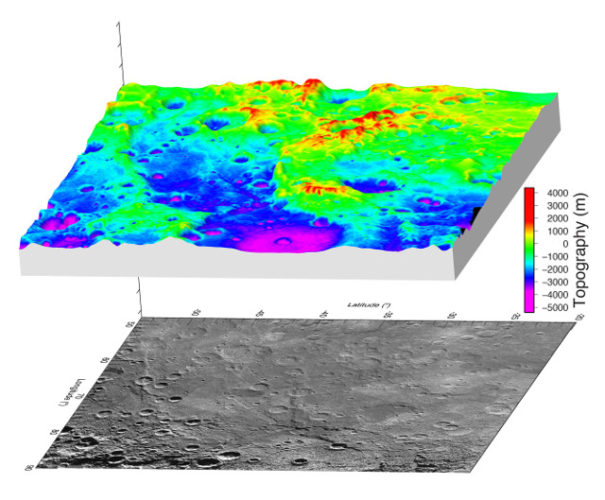
Wharton Ridge (ImageNASA/JPL-Caltech/Cornell/Arizona State Univ.)

After extending the mission of the venerable Mars Rover Opportunity another time, NASA announced that it will drive down a gully dug by a fluid a long time ago, maybe by water. The goal is to understand whether this is the remains of an ancient Martian river. It’s the beginning of yet another mission for Opportunity, which suffers wear and might be at risk because of a storm that will hit Mars.

The supernova remnant DEM L241 with the gamma-ray binary LMC P3 in the circle (Image X-ray: NASA/CXC/SAO/F. Seward et al; Optical: NOAO/CTIO/MCELS, DSS)

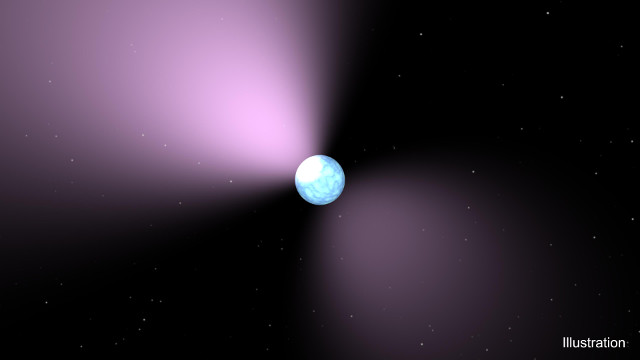
An article published in “The Astrophyisical Journal” describes the discovery of the first gamma-ray binary found outside the Milky Way, called LMC P3. A team of researchers led by Robin Corbet at NASA’s Goddard Space Flight Center used the Fermi space telescope to discover this couple in the Large Magellanic Cloud formed by a giant blue star and a companion that might be a neutron star or a black hole that are interacting producing cyclic gamma-ray emission.