NASA

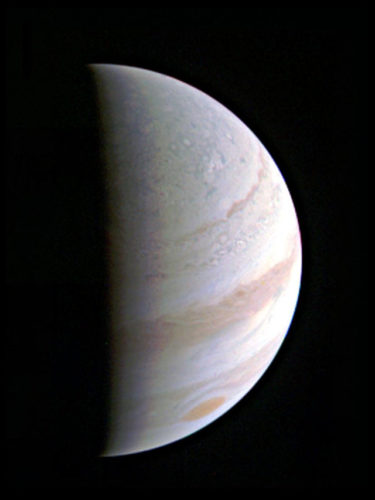
Jupiter seen by the Juno space probe from a distance of 703,000 kilometers on August 27, 2016 (Photo NASA/JPL-Caltech/SwRI/MSSS)

Yesterday NASA’s Juno space probe completed its first Jupiter flyby. At approximately 13:44 UTC it flew just 4,200 kilometers (2,600 miles) above the Jovian clouds, the minimum distance scheduled throughout its primary mission. At that point, Juno was traveling at about 208,000 km/h (130,000 mph) compared to the planet. This is the first of 36 flybys planned in the two and a half years of its primary mission.

The supernova remnants G11.2-0.3 (Photo X-ray: NASA/CXC/NCSU/K. Borkowski et al; Optical: DSS)

At the workshop “Chandra Science for the Next Decade” being held in Cambridge, Massachusetts, a new image was presented showing a supernova remnant called G11.2-0.3 obtained using NASA’s Chandra X-ray Observatory. For years these were considered the remnants of the supernova recorded by the Chinese in 386 A.D. and for this reason known as SN 386 but new exams indicate that it was a different supernova.

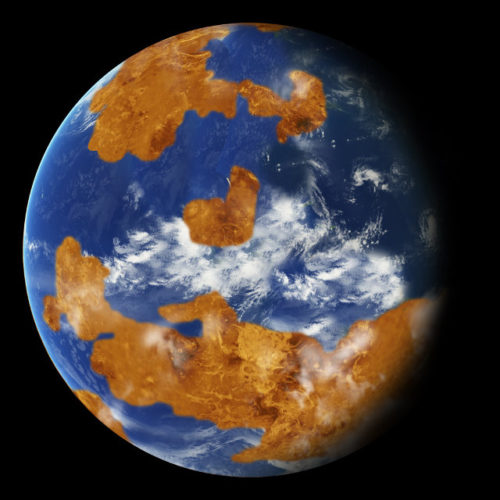
Artistic concept of what Venus possibly looked like 2 billion years ago (Image NASA)

An article published in the journal “Geophysical Research Letters” describes a research in which computer models were used to simulate the possible past climate on the planet Venus. A team of scientists at NASA’s Goddard Institute for Space Studies (GISS) led by Michael Way concluded that perhaps two billion years ago on Venus there was an ocean of liquid water on the surface and the conditions were favorable to life.

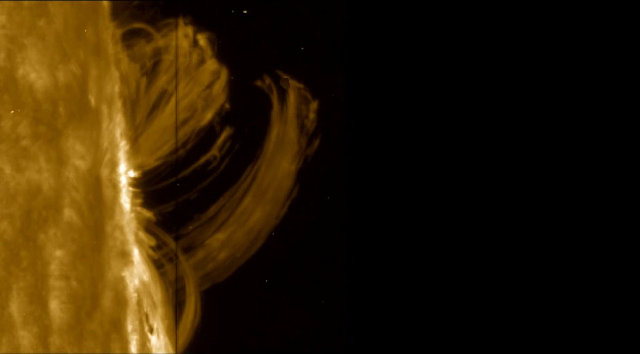
A moment of the July 24, 2016 solar flare (Image NASA's Goddard Space Flight Center; Joy Ng, producer/IRIS/Lockheed Martin Solar and Astrophysics Laboratory)

NASA released the images captured by its IRIS space probe that show a kind of rain that fell on the Sun on July 24, 2016. This event occurred during a mid-level solar flare that led to the ejection of solar material, plasma at very high temperatures which then fell like rain and for this reason is called coronal rain or in more technical jargon post-flare loops.