SpaceX

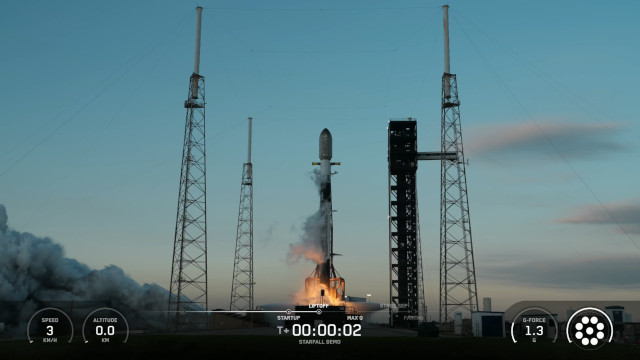
A Falcon 9 rocket lifting off on the Twilight rideshare mission (Image courtesy SpaceX)

A few hours ago, a Falcon 9 rocket launched from Vandenberg Air Force Base on the Twilight rideshare mission, carrying a total of 40 satellites in various phases. About two hours and twenty minutes after launch, the final group of satellites was deployed by SpaceX’s system. Among them were NASA’s Pandora Space Telescope and the BlackCAT and SPARCS nanosatellites, both 30x20x10-centimeter CubeSat-class satellites, part of NASA’s CubeSat Launch Initiative. These satellites will conduct their astronomical observations from low-Earth orbit.

The Sentinel-6B satellite blasting off atop a Falcon 9 rocket (Image courtesy SpaceX)

A few hours ago, the Sentinel-6B satellite was launched atop a Falcon 9 rocket from the Vandenberg base. After about 57 minutes, it successfully separated from the rocket’s last stage and set off on its course to reach the polar orbit at 1,336 kilometers altitude where its scientific mission will begin, taking over from the Sentinel-6A Michael Freilich satellite, which was launched on November 21, 2020.

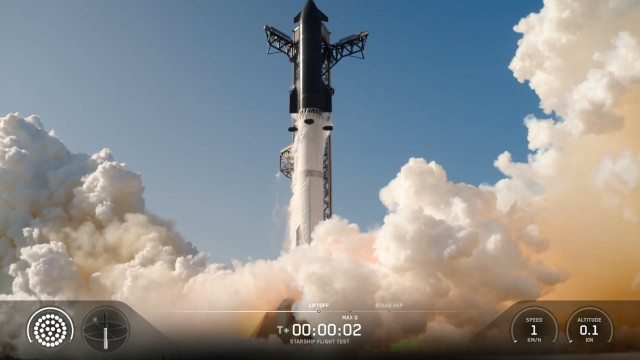
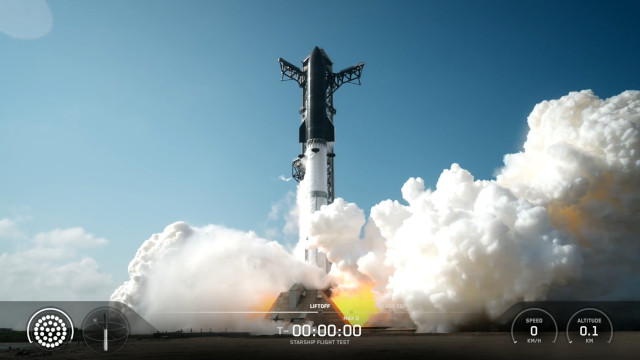
Super Heavy 15 and Starship 38 at liftoff (Image courtesy SpaceX)

It was the afternoon in the USA when SpaceX conducted a new flight test of its Super Heavy rocket and Starship prototypes, launched from its base in Boca Chica, Texas. This is the 11th test involving the entire system of Elon Musk’s company, which is supposed to revolutionize space travel with an unprecedented transport capacity and being totally reusable. They are advanced prototypes with the Super Heavy identified as Booster 15, at its second flight, and the Starship Block 2 identified as Starship 38 or Ship38 or simply S38.

The Carruthers Geocorona Observatory, IMAP (Interstellar Mapping and Acceleration Probe), and Space Weather Follow On-Lagrange 1 (SWFO-L1) space probe blasting off atop a Falcon 9 rocket (Image NASA+)

A little while ago, three space probes were launched atop a Falcon 9 rocket from the Kennedy Space Center. After approximately one hour and 23 minutes, they successfully separated from the rocket’s final stage within about 13 minutes and set off on a course that will take them to the area known as L1 (Lagrange 1), about 1.5 million kilometers from Earth, where they will begin their scientific work studying various aspects of space weather.

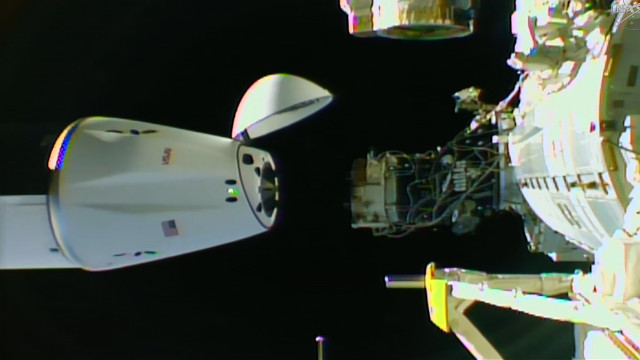
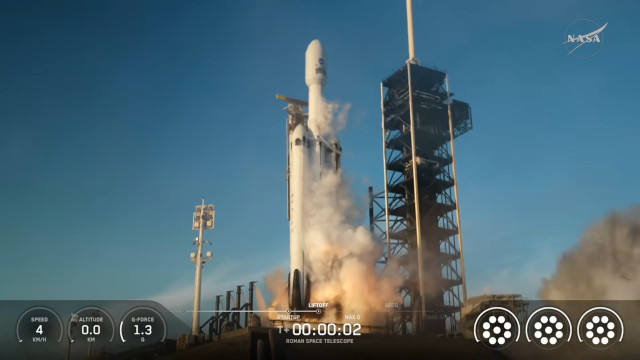
Northrop Grumman's Cygnus XL cargo spacecraft blasting off atop a SpaceX Falcon 9 rocket (Image NASA+)

A few hours ago, Northrop Grumman’s Cygnus XL spacecraft blasted off atop a SpaceX Falcon 9 rocket from Cape Canaveral on its NG-23 or CRS NG-23 mission. After about 15 minutes, it successfully separated from the rocket’s last stage and set on its course. This is the third resupply mission to the International Space Station with various payloads launched using the Falcon 9 rocket while waiting for the new version of Northrop Grumman’s Antares rocket to be ready. It’s also the first to see the use of the new version of the Cygnus cargo spacecraft.