SpaceX

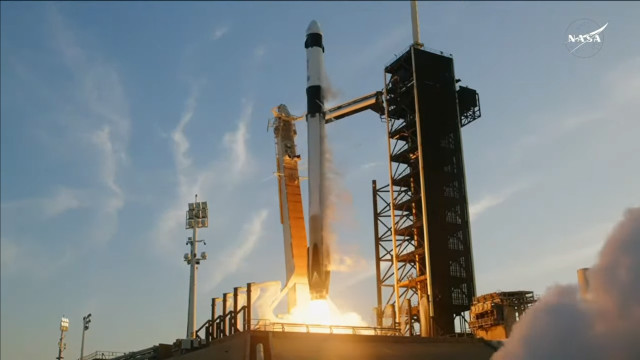
The Crew Dragon Endurance spacecraft blasting off atop a Falcon 9 rocket to start the Crew-10 mission (Image NASA)

A few hours ago, SpaceX’s Crew Dragon Endurance spacecraft blasted off atop a Falcon 9 rocket from the Kennedy Space Center in its Crew-10 or SpaceX Crew-10 mission. After almost exactly ten minutes, it successfully separated from the rocket’s last stage and went en route to carry out its mission. This is the 10th crewed mission of the Crew Dragon spacecraft within the normal rotation of the International Space Station crew.

The SPHEREx space telescope and the PUNCH satellites blasting off atop a Falcon 9 rocket (Image courtesy SpaceX)

A few hours ago, the SPHEREx space telescope and the PUNCH satellites, two NASA astronomy missions, blasted off atop a SpaceX Falcon 9 rocket from the Vandenberg base. After about 42 minutes, SPHEREx successfully separated from the rocket’s last stage, and about 10 minutes later, the PUNCH satellites also separated, within about a minute. Both missions will operate from a Sun-synchronous orbit at an altitude of 700 kilometers for SPHEREx and 570 kilometers for PUNCH.

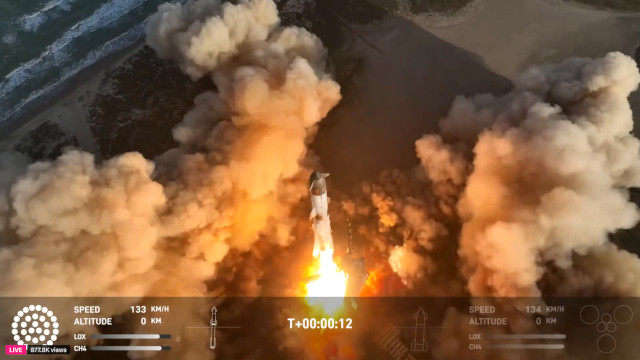
Super Heavy 15 and Starship 34 at liftoff (Image courtesy SpaceX)

It was the afternoon in the USA when SpaceX conducted a new flight test of its Super Heavy rocket and Starship prototypes, launched from its base in Boca Chica, Texas. This is the 8th test involving the entire system of Elon Musk’s company which is supposed to revolutionize space travel with an unprecedented transport capacity and being totally reusable. They are advanced prototypes with the Super Heavy identified as Booster 15 and the Starship Block 2 identified as Starship 34 or Ship34 or simply S34.

The Nova-C Athena Moon lander and the Lunar Trailblazer satellite blasting off atop a Falcon 9 rocket (Image courtesy Intuitive Machines)

A few hours ago, the Nova-C Athena Moon lander blasted off atop a SpaceX Falcon 9 rocket from Kennedy Space Center on Intuitive Machines’ IM-2 mission. After about 48 minutes, it successfully separated from the rocket’s last stage and set off on a course to the Moon, where it’s scheduled to attempt a landing on March 6. About 3 minutes later, NASA’s small Lunar Trailblazer satellite also separated from the rocket’s second stage, but its course is very different from Athena’s, so it will not reach the Moon until June.

Super Heavy Booster 14 and Starship 33 at liftoff (Image courtesy SpaceX)

It was the afternoon in the USA when SpaceX conducted a new flight test of its Super Heavy rocket and Starship prototypes, launched from its base in Boca Chica, Texas. This is the 7th test involving the entire system of Elon Musk’s company which is supposed to revolutionize space travel with an unprecedented transport capacity and being totally reusable. They are advanced prototypes with the Super Heavy identified as Booster 14 and the Starship Block 2 identified as Starship 33 or Ship33 or simply S33.