
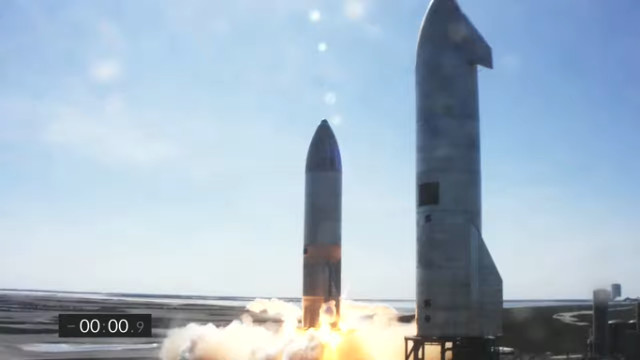
It was afternoon in the USA when SpaceX conducted in Boca Chica, Texas, the flight test of the Starship prototype identified as SN9, the second after the one conducted on December 9, 2020. SN9 was supposed to solve the problems of the previous prototype and it too carried out regularly its flight up to an altitude of about 10 kilometers and then attempted a controlled landing at the end of a series of maneuvers. After 6 minutes and 26 seconds of flight, like its predecessor, SN9 landed too fast and was destroyed as a result. SpaceX confirmed that its good results with regards to Starship’s maneuverability, but landing is still an issue. With the many first-stage landings of the Falcon 9 rocket, it’s making that kind of maneuver look easy, but it requires perfect systems tuning.
After having made a few “hops” up to 150 meters of altitude with two Starship prototypes, SpaceX is testing the on-board systems much more heavily with real flights, even if only of a few kilometers. The project is very ambitious given that Starship is a spaceship with a new type of engine that can blast off on its own and atop the SuperHeavy rocket can be launched into deep space.
Yesterday’s test came after some controversy between Elon Musk and the FAA (Federal Aviation Administration), the American agency that issues flight licenses. SpaceX’s founder and CEO had an outburst against bureaucracy, and according to rumors from alleged sources inside the FAA in the SN8 prototype test, SpaceX had violated the flight license and had to provide adequate explanations. There are no official communications, so it’s difficult to understand the bureaucratic situation, but it’s certain that on January 28, it wasn’t possible to carry out the SN9 test due to the lack of a flight license.
From a technical point of view, yesterday’s test was in many ways a repeat of the December 9 test. There was a vertical climb followed by maneuvers which resulted in the SN9 falling in a controlled manner after the engines were shut down. Unfortunately for SpaceX, the ending was also the same as it was two months ago, with the prototype being destroyed in the crash because it didn’t slow down enough. Maybe there was again a problem with the Raptor engines because it seems that at least one didn’t restart during the last maneuver that was supposed to flip SN9 back to a vertical position.

The SN10 prototype is visible near SN9 in the pre-blastoff images. At the moment, the SN10 systems are in the test phase and we await news from SpaceX to understand when we can expect a new flight test. A lot depends on the analysis of the SN9 test and in particular on the reasons for the final crash. That’s what tests are for.
This is SpaceX’s official video of yesterday’s test.

Permalink