July 2021

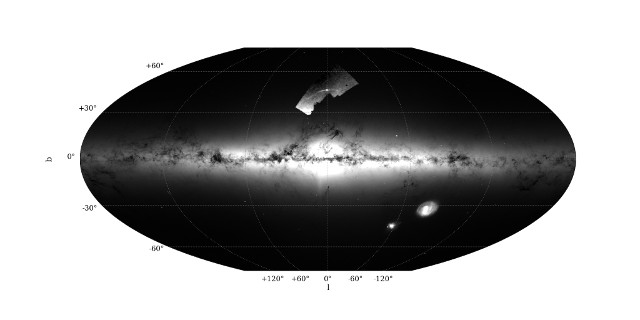
A view of the sky with Palomar 5 at the top-center

An article published in the journal “Nature Astronomy” reports a study on the star cluster Palomar 5 that indicates that in a billion years only black holes will remain inside it. A team of researchers led by Professor Mark Gieles of the University of Barcelona studied this ancient and very low-density cluster by conducting a series of simulations to try to predict its future. The number of black holes inside it is already above average today and is subject to gravitational interactions with the consequence that in the distant future its size will increase and only black holes will remain.

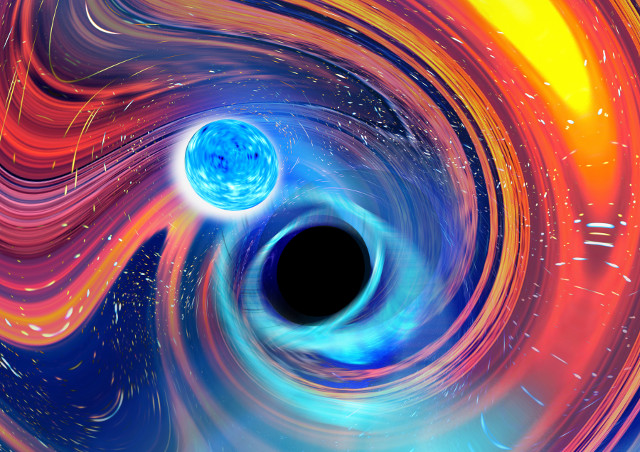
Artist's concept of merger between a black hole and a neutron star. (Image courtesy Carl Knox, OzGrav - Swinburne University)

An article published in “The Astrophysical Journal Letters” reports the detection of gravitational waves emitted by two cases of mergers of a black hole with a neutron star. Scientists from the LIGO, Virgo, and KAGRA collaborations examined data collected by the Advanced LIGO and Advanced Virgo detectors to find evidence of this type of merger in two events detected in January 2020. Previously, there were other candidates but the data left various doubts about the nature of the objects that merged.

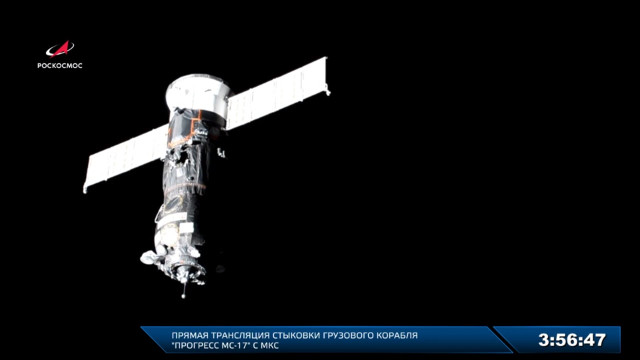
The Progress MS-17 cargo spacecraft approaching the International Space Station (Image courtesy Roscosmos)

A few hours ago, the Progress MS-17 spacecraft docked with the International Space Station in the mission also referred to as Progress 78 or 778. The Russian cargo spacecraft, which blasted off last Tuesday, June 30, carries food, water, scientific experiments, fuel, and various hardware.

The Progress MS-17 cargo spacecraft docked with the International Space Station’s Russian Poisk module. Today, the crew will probably proceed with the hatch opening and the procedures to make the Progress MS-17 an appendage to the Station.